AND SO IT BEGINS…AGAIN
Our weekend began with another visit to Wilding Acres Farm to pick another four quarts of blueberries. That was followed by a trip to Kalawi Farm for peaches.

Yes, Peach Week is here again! I know I call it Peach Week, but it really takes two or three weeks to get everything done.
I was unable to get my favorite peach variety, Win-Blo, even though I checked ahead of time to be sure they’d be there. That may have been why I came home with only 75 pounds of peaches instead of the 100 I bought last year. I bought Contenders again but am also trying two new (to me) varieties: Bounty and Fire Prince.
Bounty peaches are HUGE. This is a variety that’s supposed to be good for canning and freezing. I can’t find much online about Fire Prince peaches so we shall see how I feel about them.

I kicked off my canning with the Bounty peaches as they were the ripest of the three. I’ve canned two loads of peaches in my Nesco Smart Canner, one each day. Click HERE for the story of that acquisition.
Things are going much better than when I was first trying, and failing, to use the Nesco Smart Canner. It was a good purchase for me, even though the learning curve was so frustrating (check out my struggles HERE and HERE). I really like that using the Nesco means canning doesn’t have to be an all-day process. Because it does smaller batches, I find my back can last through preparing and processing one load in the Nesco before the pain becomes debilitating.
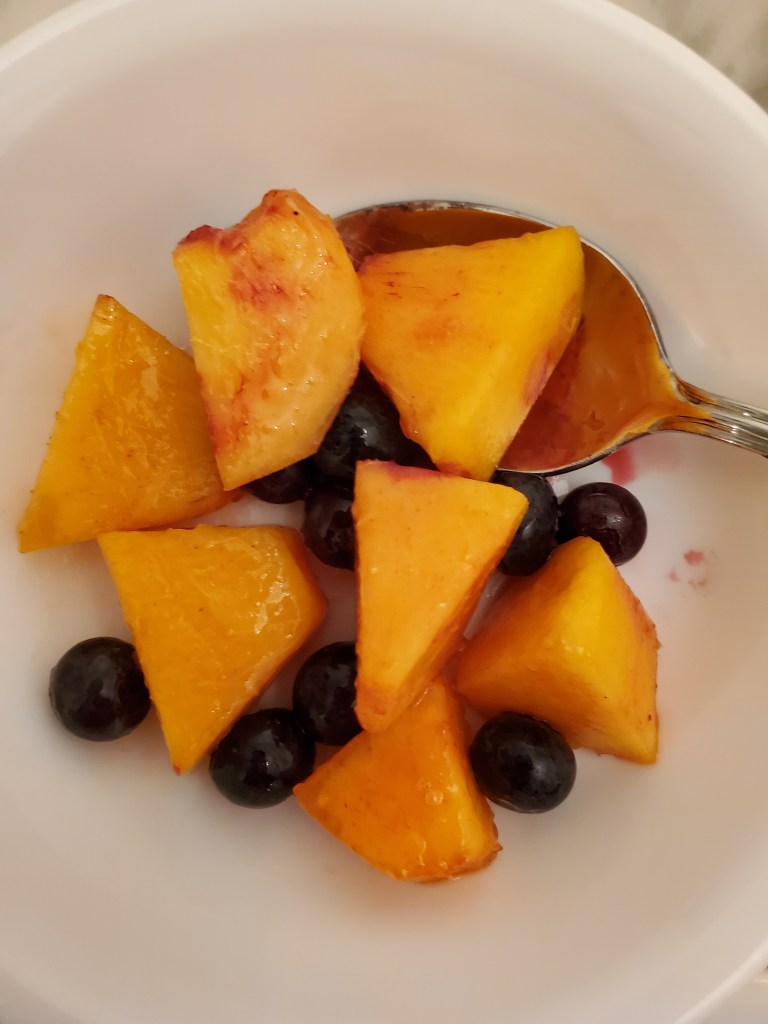
Oh, and look what’s been for dessert the past two nights:

AN ADDITION TO CHICKEN HILL
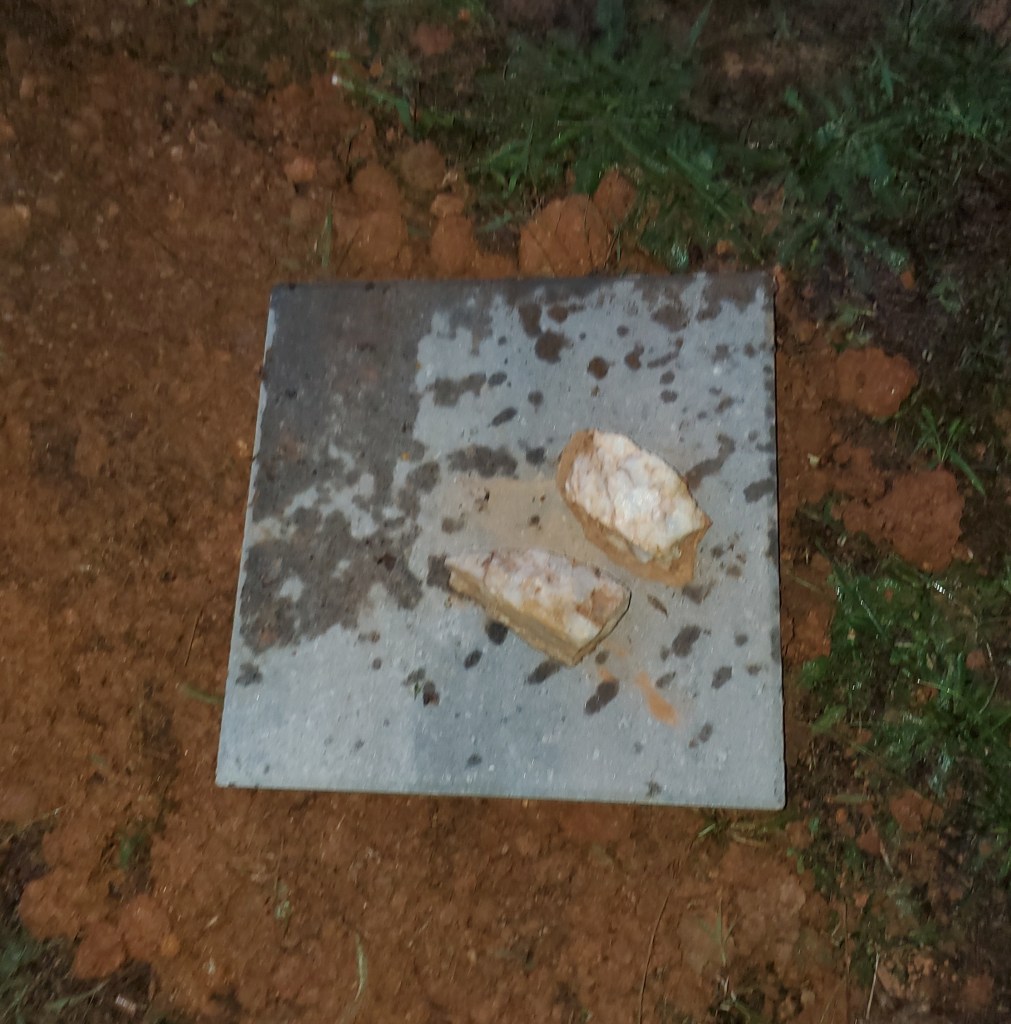
Caboose is no more! She died today and we buried her on Chicken Hill where our previously deceased chickens are buried. She was one of our two Cream Legbar chickens. Her BFF, the other Cream Legbar, was Pecky. Caboose was a sweet chicken and she laid huge blue eggs.
WATERMELON
With 4th of July approaching, watermelons are on sale. The chickens love cold watermelon on a hot day, so I purchased one this past week.
I had more intentions for this watermelon than for chicken food, though. I’m dehydrating part of it.
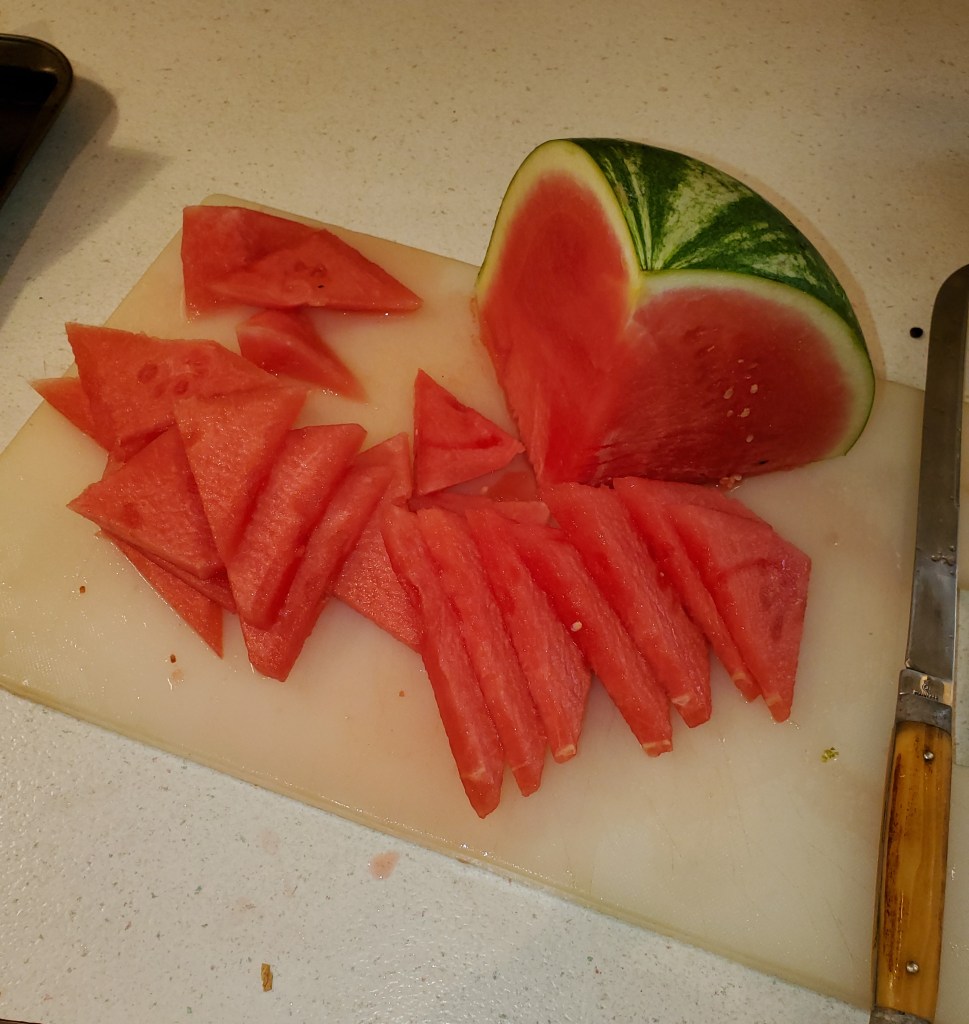
After cutting the watermelon into 8ths, I cut the rind off three of the sections and cut it into approximately 1/4″ wide slices.
I placed the slices on dehydrator trays and set it to do what it does best – removing the moisture while intensifying the flavor.
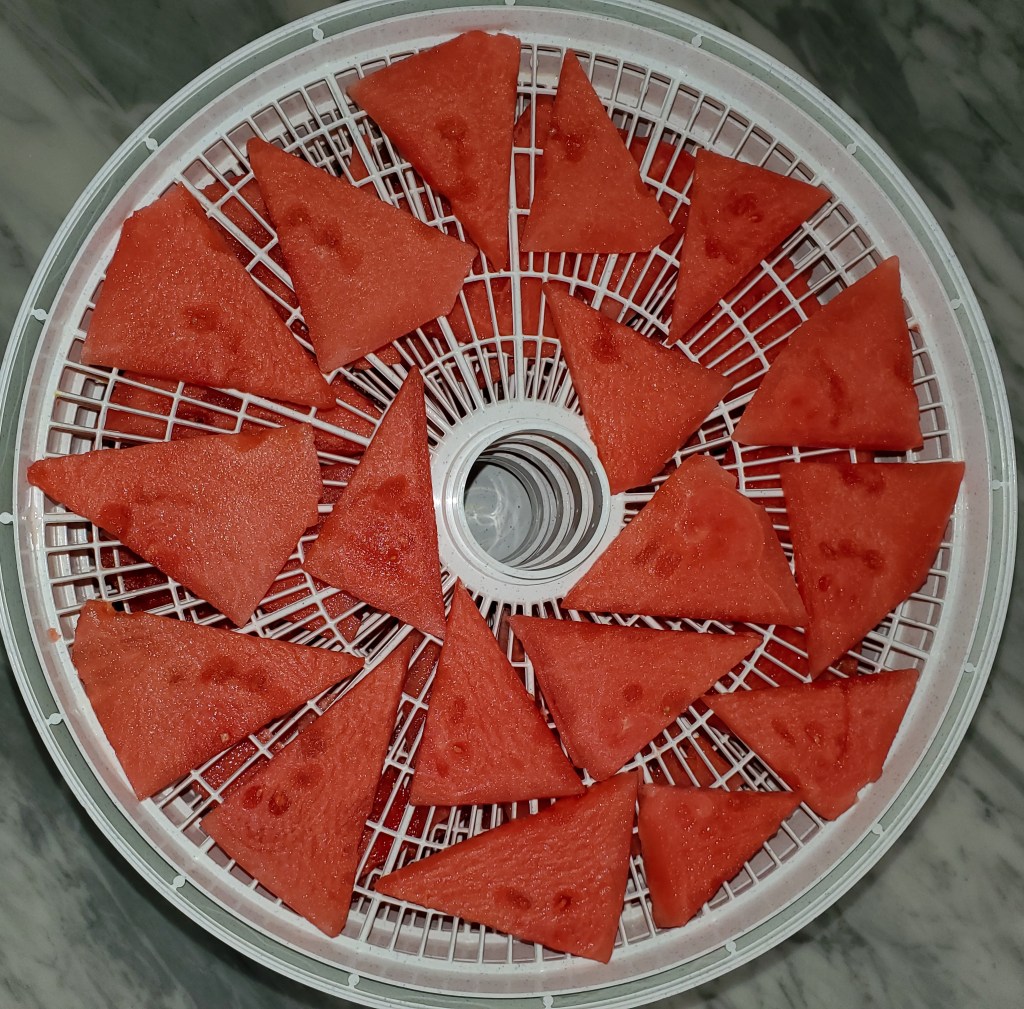
Watermelon does take a little extra time to dehydrate so I will turn the slices in the morning and let it go another 12-ish hours.
I ate scraps that didn’t fit on the trays. The rinds had a small amount of flesh on them so those went to the chickens. There was even some left for the worms.
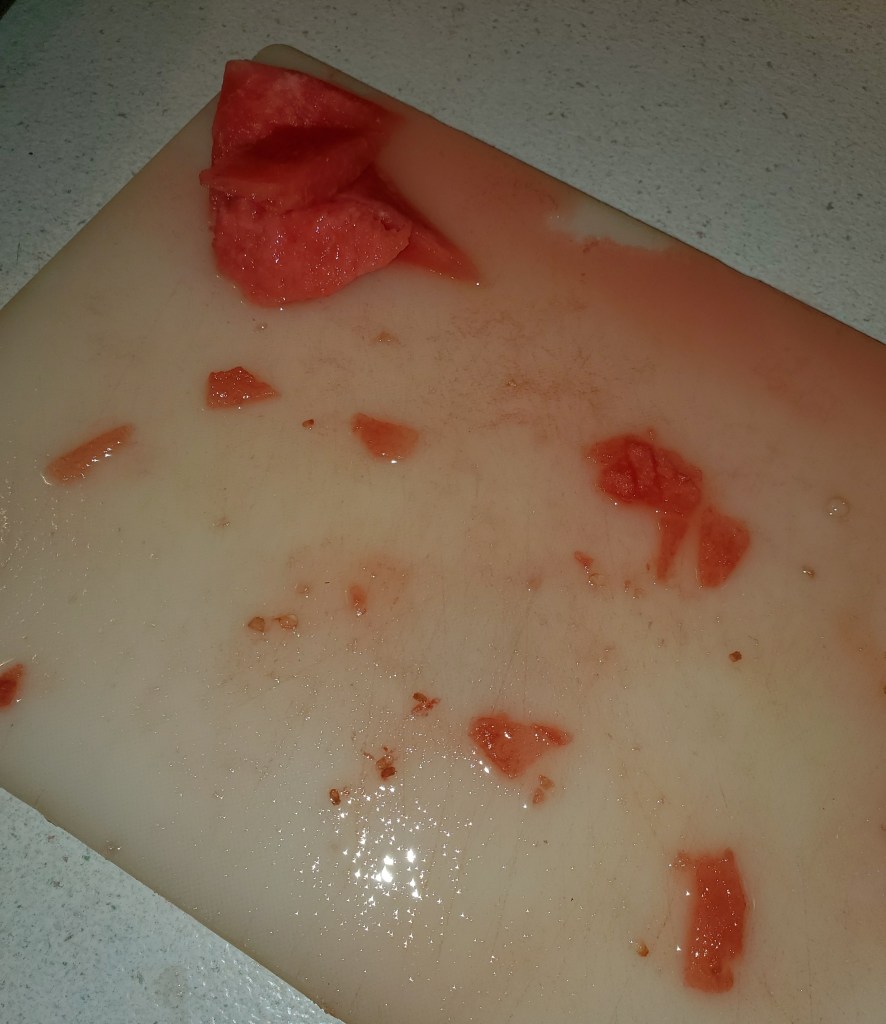
Those little wafers of dehydrated watermelon will most certainly be relished this winter!
BLUEBERRIES
Last weekend our friends at Wilding Acres Farm invited us to pick blueberries. Their bushes were crammed full of ripe and soon to be ripe berries.
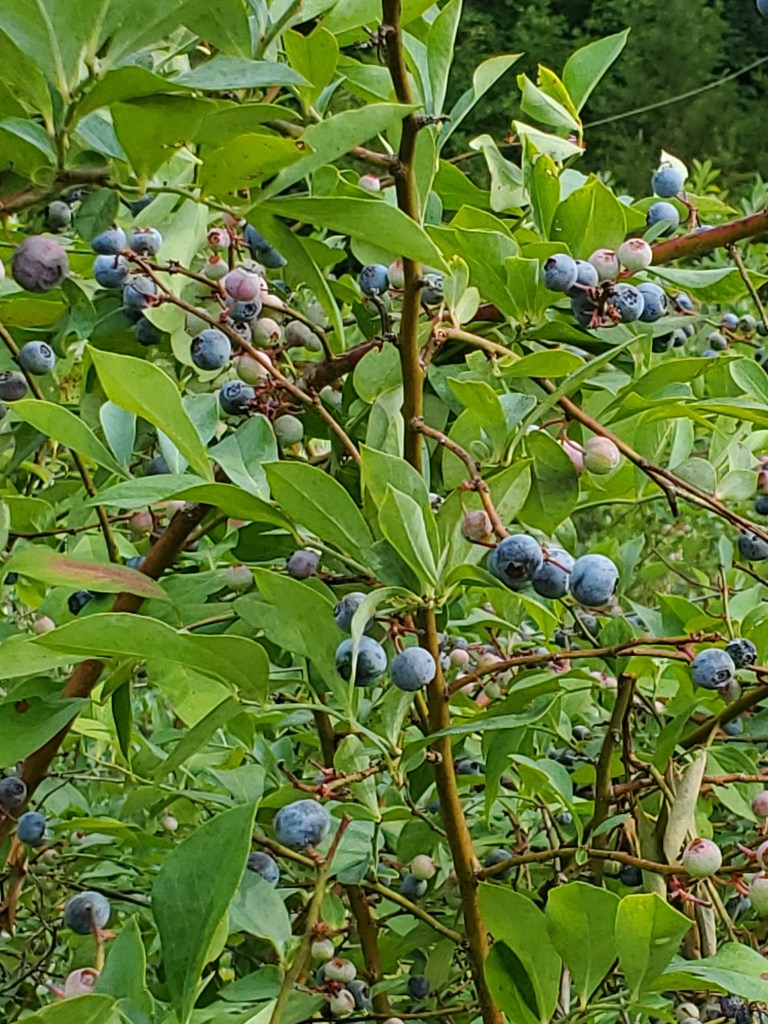
They’ve been waiting in the refrigerator for me to process them. Today, I wasn’t feeling very work-y so that was a good project.
After washing and drying them, I set aside enough for a treat, and I froze the rest on silicone trays. This keeps them from freezing as a block, making them easy to use throughout the year.
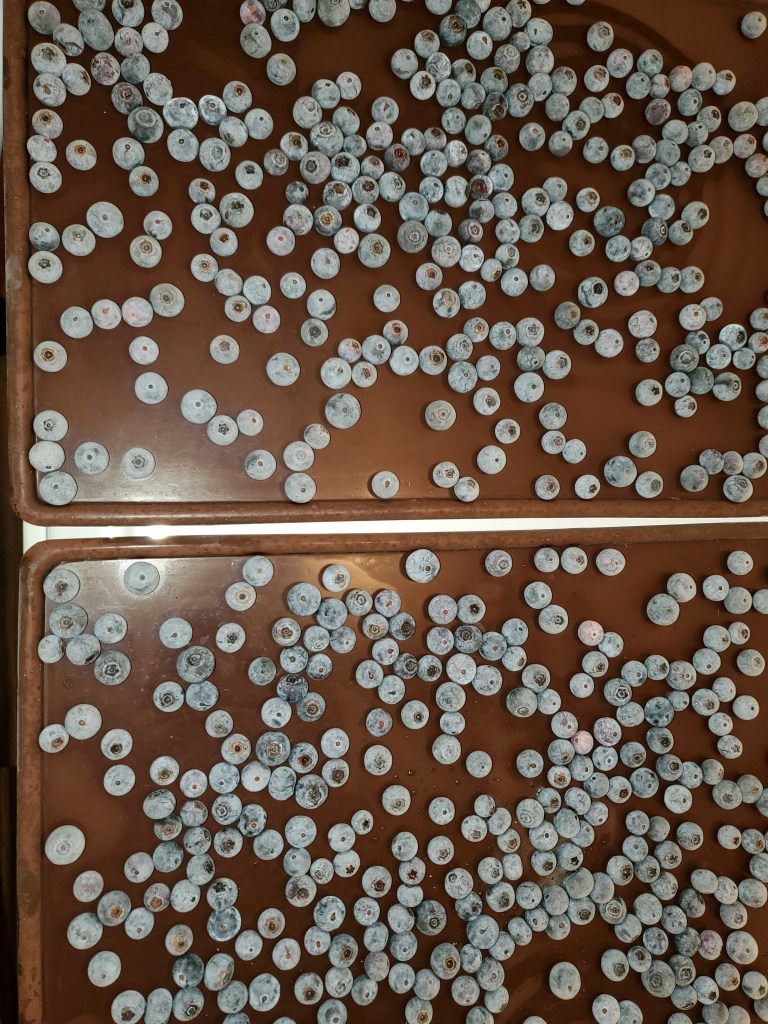
After they were in the freezer for a couple of hours, I quickly put 1 cup each into snack-size baggies. Then I put those small bags into a gallon-size baggie and put them back into the freezer to use throughout the next year.

I ended up with 10 cups of blueberries in the freezer.
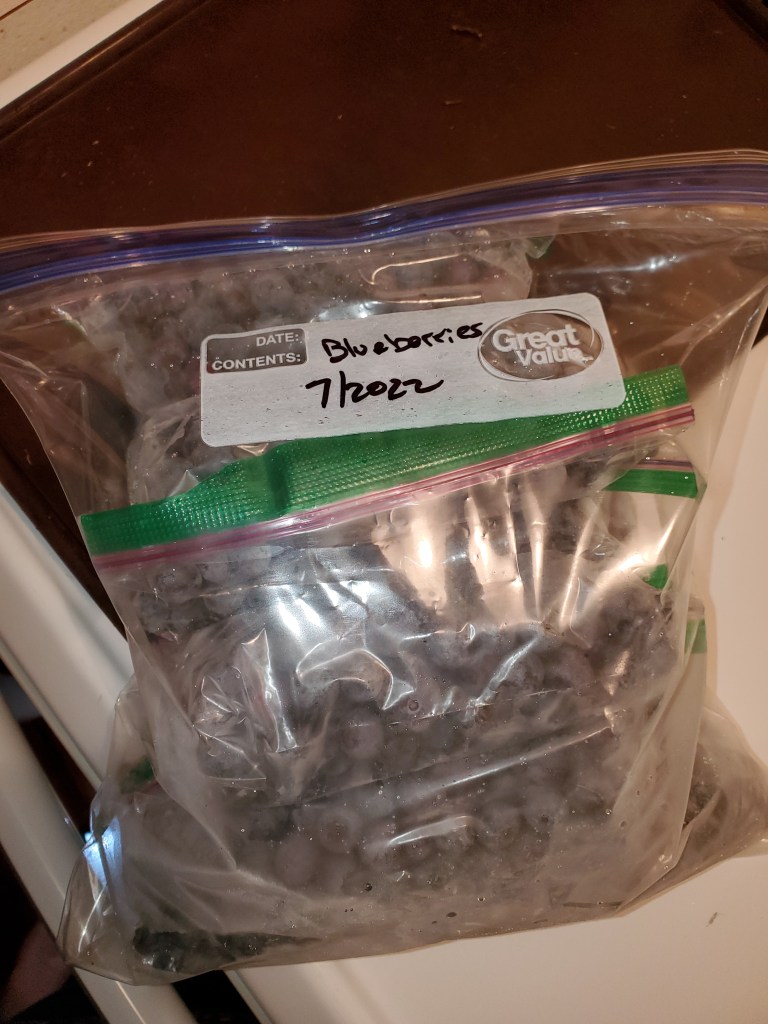
And the ones I set aside? I saved about a cup for immediate use…
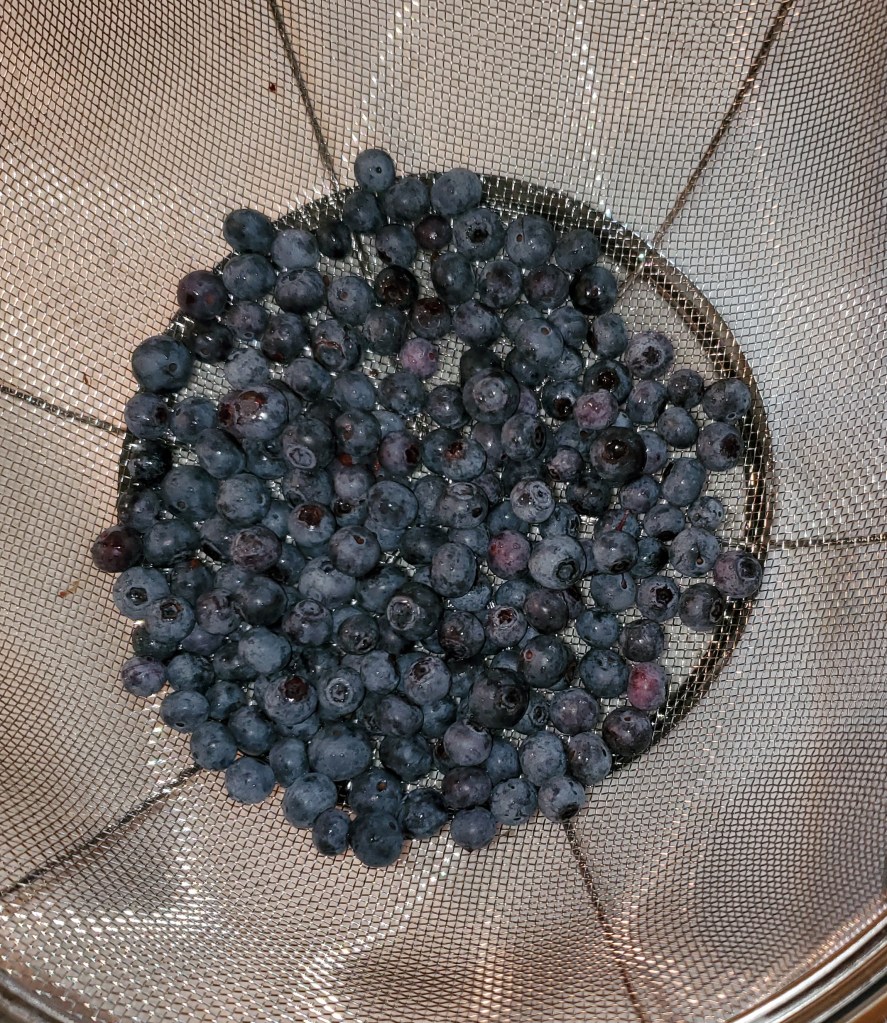
… and made a batch of blueberry muffins.
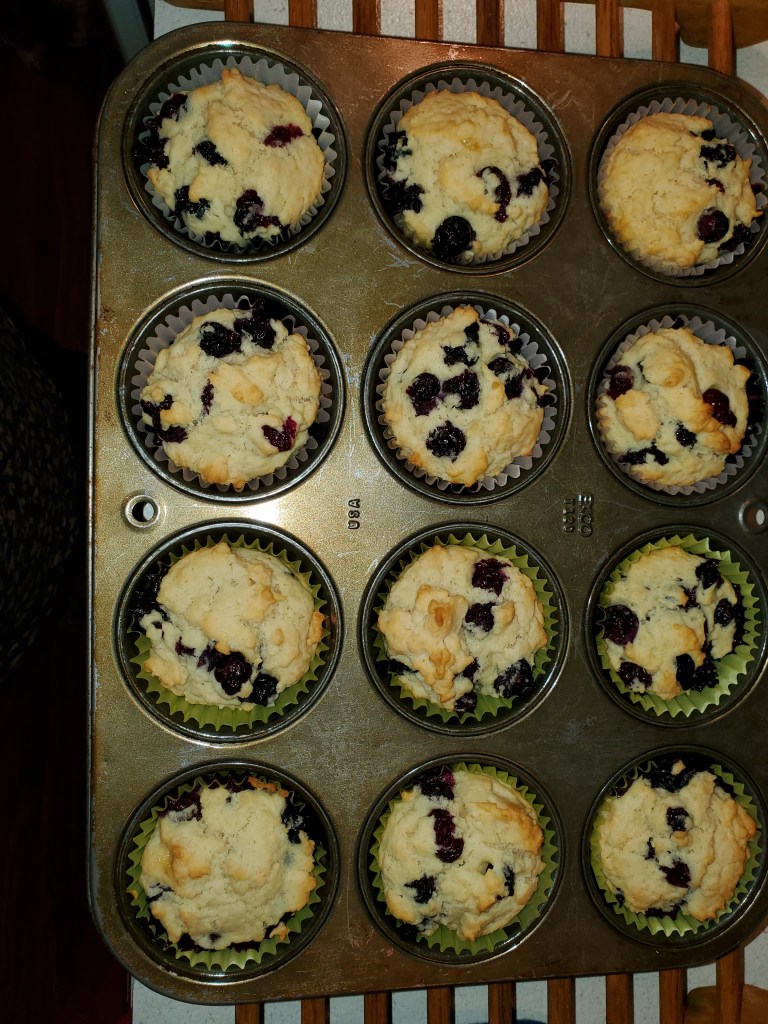
I just used a basic muffin recipe from my old 1970’s (or 80’s?) Betty Crocker cookbook. They were so much better than you get from a mix.
BLUEBERRY MUFFINS
1 egg
3/4 cup milk
1 cup fresh (or 3/4 cup frozen) blueberries
1/2 cup vegetable oil
2 cups flour
1/3 cup sugar
3 teaspoons baking powder
1 teaspoon salt
Preheat oven to 400 degrees. Grease bottoms only of 12 medium muffin cups (I use paper liners).
Beat egg; stir in milk, blueberries, and oil. Stir in remaining ingredients all at once just until flour is moistened (batter will be lumpy).
Fill muffin cups about 3/4 full.
Bake about 20 minutes or until golden brown. Immediately remove from pan.
Try to wait for them to cool a bit before eating one!
POOP GLORIOUS POOP
This weekend I harvested my worm bin for the first time.
Back in April, I got my first worm bin. It was gifted to me by a new friend who was moving to Nebraska from South Carolina and the moving company wouldn’t carry it. Click here to check out their first feeding.
These are the easiest critters to take care of. I keep them in the house in an unassuming gray storage tote. Once a week I dig a hole in the bedding of their bin, put in a pile of food scraps, and cover it back up. That’s it. They do the rest.
I purchased a moisture meter and a temperature gauge to be sure their environment was just the right amount of moist-but-not-too-moist and cool-but-not-too-cool. After a while I have come to be able to just tell by handling the bedding in their bin.
I also have a handy chart of what to feed them, but it turns out even that is not hard to remember after a while. There were a couple of foods that I was surprised are not on the acceptable food list – pineapple and cranberries. I don’t know what prompted me to look those up but, it turns out they are too acidic for worms.
So, for the last two months I’ve been mostly ignoring the worms. Until this weekend. This weekend it was time to harvest worm poop.
Harvesting a Worm Bin is Easy
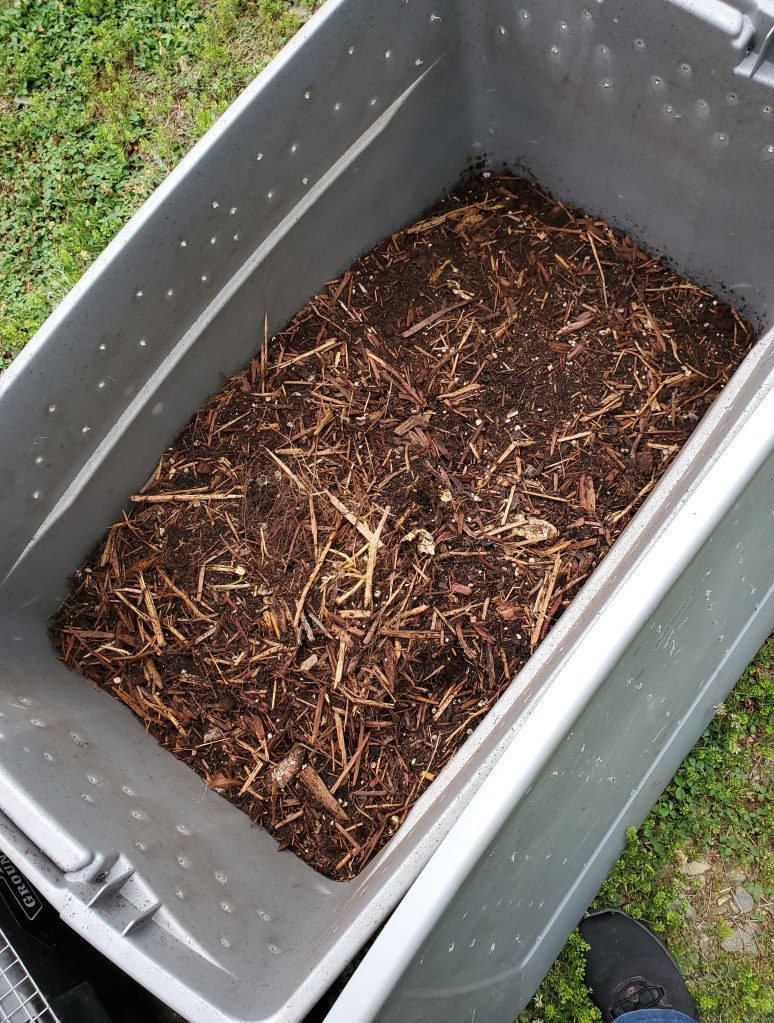
The previous two or three feedings were done in one end of the worm bin. This was to get as many worms on one side as possible.

I started the sifting process with a piece of hardware cloth over my wagon. However, I found was it easier to just sift it through a colander. I’d fill the colander with worm bedding and shake, shake, shake it until the castings were in the wagon and only the un-composted bedding was left in the colander.
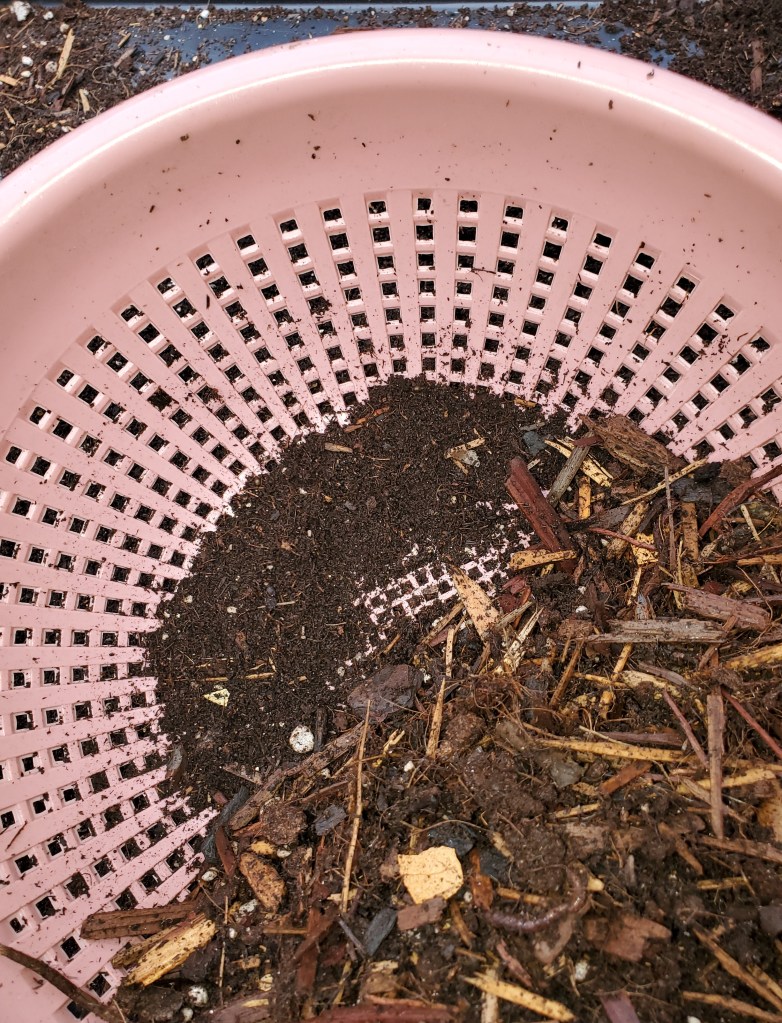
It was actually kind of rhythmic and soothing to shake that colander. It reminded me a bit like panning for gold. As you shake and swirl the “pan” the “gold” settles. See it there in the upper left? That’s what we’re looking for! The bedding was put back in the worm bin.
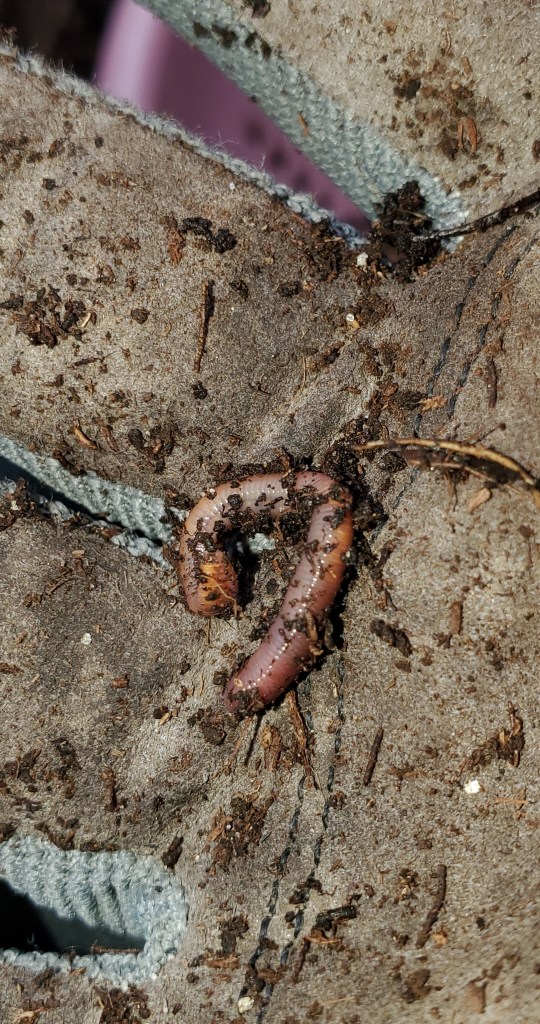
Occasionally, I’d come across a worm in the colander and even in the sifted castings. They, too, were returned to the worm bin.
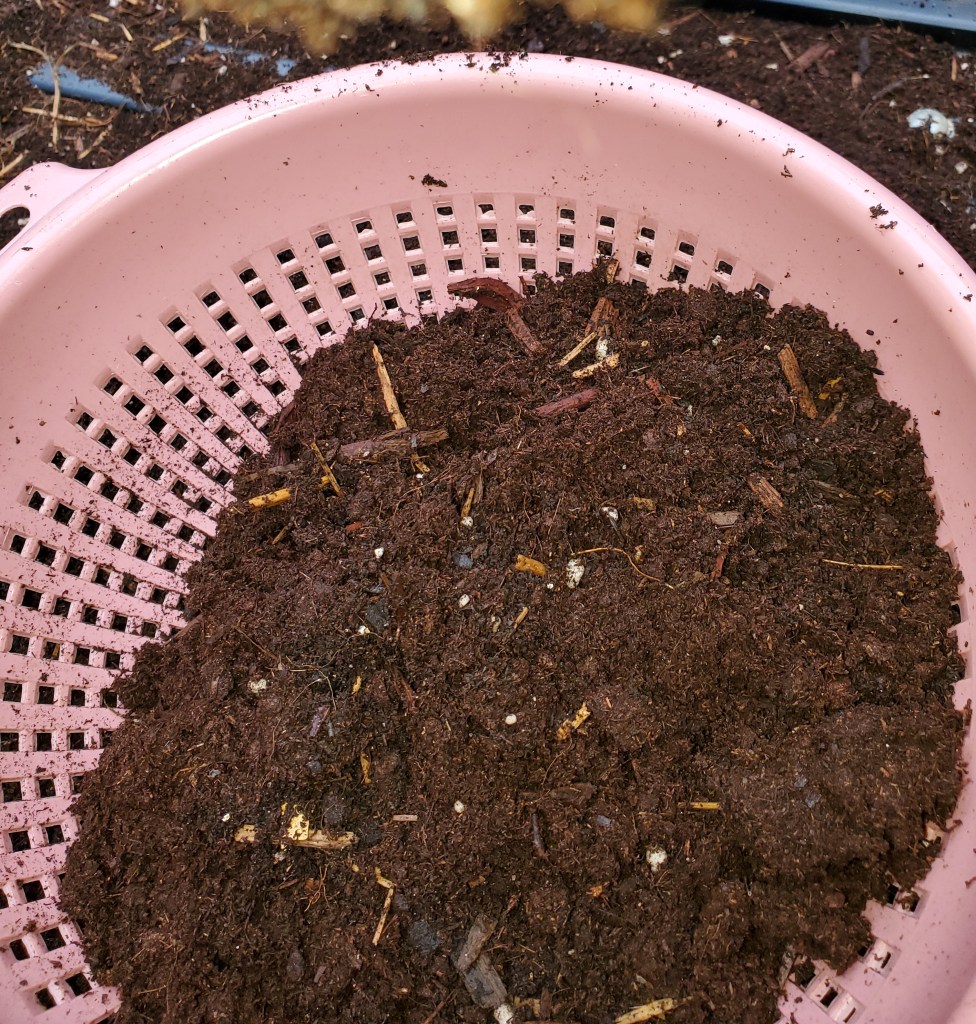
The further down I dug, I began to get more humus and less bedding. This stuff was rich and luscious!
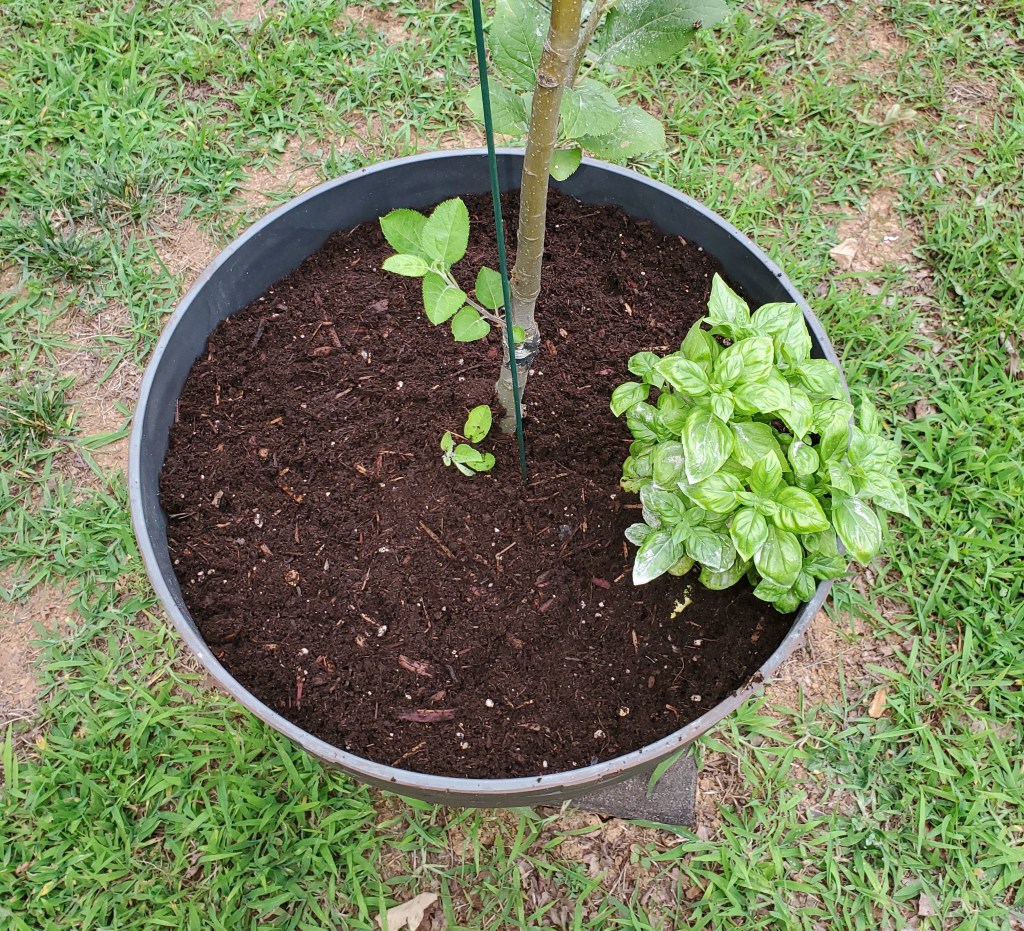
I only harvest about a third of the bin but ended up with a five-gallon bucket of plant superfood – all created by my lowly worms. I used it in my apple trees and in one of my planting containers that has not been very successful to grow things in.
When I was done, I added some peat moss to the worm bin for additional bedding, fed them (on the side I had just harvested), and put them back to bed. I’ll harvest the other side another day – after they have moved to the other end of the bin.
Want to know why worm castings are so good in the garden? Start with this article talking about some of the reasons to use worm poop in your garden.
MORE PINEAPPLE-Y GOODNESS
Are you tossing your pineapple peels and cores in the garbage like I used to do? Now is the time to stop that!
While there are amazing benefits from eating the fruit of the pineapple, there are actually some great reasons for keeping and using the trimmings the next time you cut into one of these luscious fruits.
THINGS I’VE DONE WITH PINEAPPLE SCRAPS
COMPOST — Pineapple trimmings are a good compost ingredient because it contains a high amount of nitrogen which promotes green growth. Pineapple is the perfect choice if you are looking to add nitrogen to your compost pile. Also, the sugar in pineapple helps break down organic material, making it more usable by plants.
CHICKENS — Pineapple scraps can be fed to chickens, in moderation. Pineapple can keep them healthy by boosting their immune system which will help prevent them from getting sick. Additionally, letting your chickens eat pineapple regularly has been shown to help protect against intestinal worms. A disadvantage of feeding your chickens pineapple is that some chickens have a hard time digesting the pineapple and the fiber might end up getting stuck in their crop, especially when they are given too much of it. Moderation is very important – no more than two or three times a week.
PINEAPPLE WATER — As you are cutting up a fresh pineapple put the skin, core and other scraps in a container that has a lid. Cover with water. Put on the lid. Refrigerate overnight.
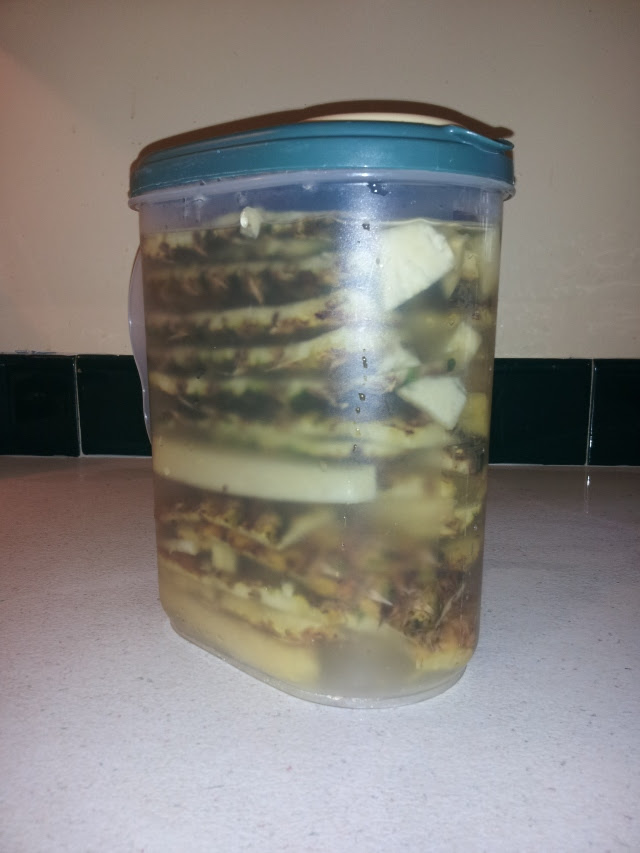
The next morning, pour the water through a strainer, into a different container. This is very tasty! The water has just a hint of pineapple flavor – a nice change from plain water.
PINEAPPLE PEEL FACIAL — My well water makes my skin really rough and dull. Noticing that my hands become very soft and smooth when I’m trimming and cutting a pineapple, I decided to try it on my face. I simply rub the pineapple side of one of the peels on my face and let it set for five minutes before washing it off. It makes my face feel smooth and looks refreshed!
OTHER USES FOR PINEAPPLE SCRAPS
I’ve not tried these, but leave a comment if you have:
Pineapple Sun “Tea” — Combine the pineapple skin, core and other scraps in a container that has a lid. Cover the pineapple scraps with water and leave out in the sun for several hours until the water turns yellow. Strain, chill, and drink. You can add sugar to sweeten it if you wish.
Pineapple Potpourri — Cut the pineapple skins into small pieces and dry in the oven or dehydrator. Add cinnamon sticks and other spices.
Pineapple Peel Tea – For a cooked, spicier version of Pineapple Water, place the scraps in a medium saucepan, add 2 to 3 cinnamon sticks, and let it simmer on low heat for 25 to 35 minutes. Turn the heat off and let this concoction steep for another 25 to 30 minutes. Then strain the peels out. You can serve it hot or cold and sweetened to taste.
Pineapple Vinegar — click here for a recipe and here for a review or that recipe.
Pineapple Jelly — yes, from the peels! Click HERE to watch a You Tube video to learn how.
Grow another pineapple (or at least a houseplant!) — plant the leafy top of a pineapple to grow a beautiful houseplant. It might even bloom and produce fruit. Follow these directions.

Now we have come to end of our journey learning about pineapple. We know how to cut a pineapple (click here), why we should include it in our diets (click here), and finally, how to use every scrap of the pineapple. It certainly is a useful plant!
The only question now is what are we going to do with this knowledge?
THE MIGHTY PINEAPPLE
PINEAPPLE IS BETTER FOR YOU THAN YOU REALIZE
Pineapple is loaded with essential vitamins, minerals, fiber, antioxidants, and other helpful compounds. It also has anti-inflammatory and immune-supporting properties. That’s because the fruit, juice, peel and stem contain bromelain, a type of enzyme.
Among its multiple uses, bromelain’s therapeutic benefits include:
Boosts the immune system
May Improve Eye Health
Helps Fight Sinus Infections
Can Help With Weight Loss
Helps Muscle Recovery after Exercise
May Help Heal Skin
Can Fight Asthma and Allergies
Can Reduce Joint Pain and Arthritis Symptoms
Helps With Digestive Disorders
Helps Protect the Heart
Goodness! Based on what I’ve been reading, we should be drinking a glass of pineapple juice with our breakfast in the morning instead of orange juice.
Pineapple is widely considered safe, though a small percentage of people may have an allergy to it or to bromelain. People who have diabetes or who take blood thinners should be mindful of portion sizes when eating pineapple. Another thing to be aware of is that the bromelain in pineapple may increase the absorption of certain antibiotics.
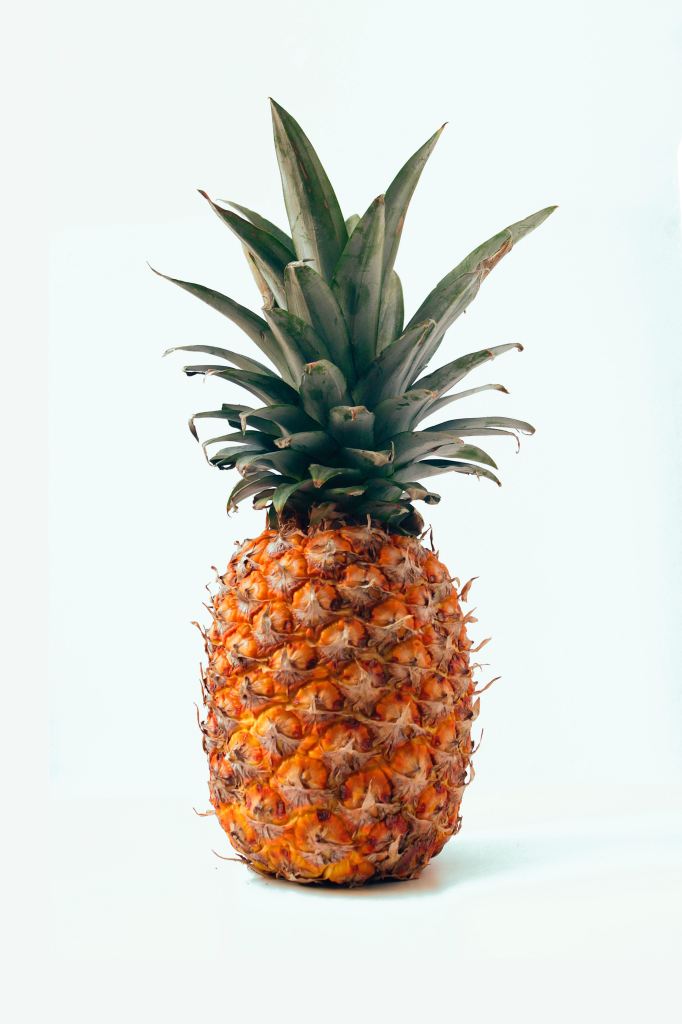
Leave a comment with your favorite way to enjoy pineapple! Is it cottage cheese with pineapple, smoothies, Hawaiian pizza, pineapple upside down cake, pineapple cucumber salad, pineapple coleslaw … or something else?
MAYBE THEY’RE NOT SO SMART AFTER ALL
We installed the automatic chicken door a few weeks ago and it has been working great (click here to see that post). The chickens put themselves to bed and the door closes at 8:30 pm without human participation.
Until now.
Why, why have they suddenly decided they don’t know how to do that anymore?
The past few days, first one got left out of the coop when the door closed, then two.
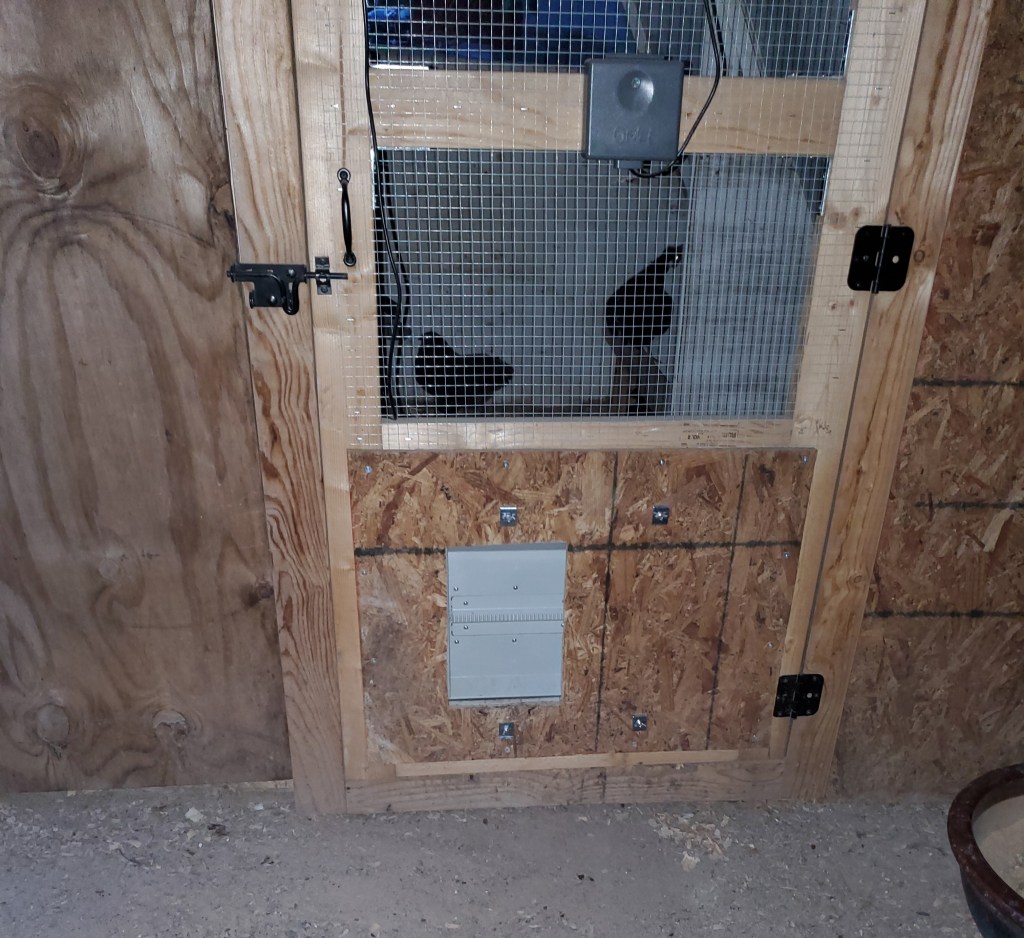
Tonight, SIX of them missed curfew!
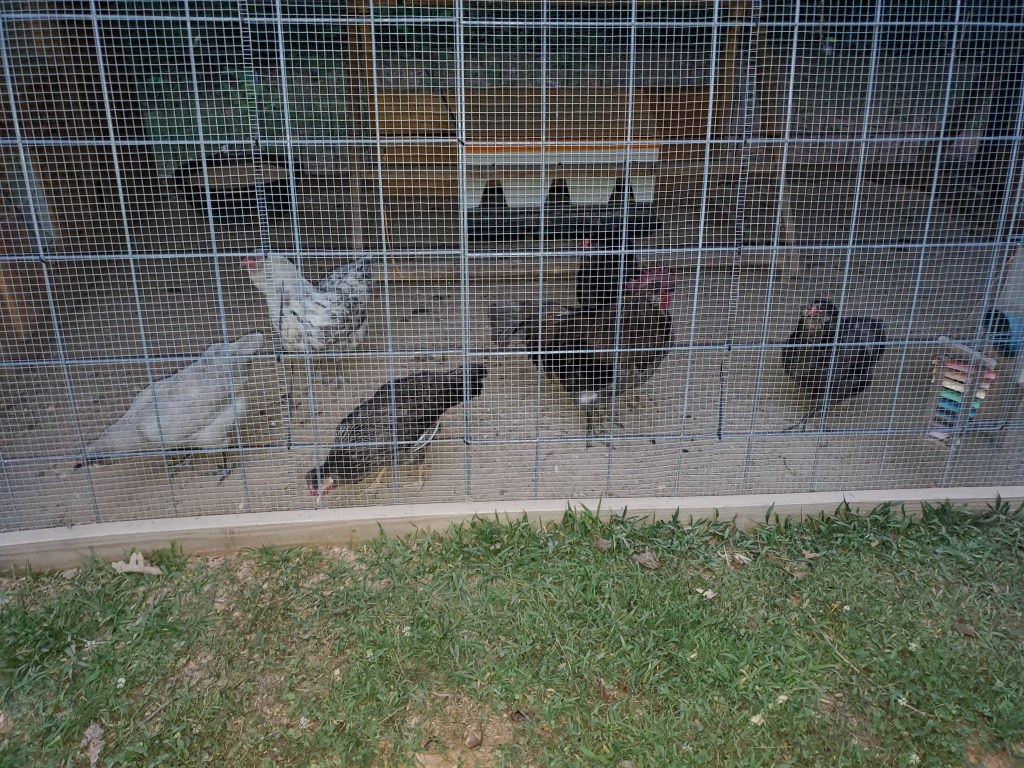
The rooster stared at the house with his beady little eyes, willing us to comply with his will.
Which we did.

Good grief!

 Two Chickens Homestead
You must be logged in to post a comment.