CHICKEN TRACTOR – PART 3
The project may be going slow but it’s going. Every weekend we get a little more done on the Chicken Tractor. The roof is on, the coop is painted inside and out, and the coop structure is attached to the tractor.
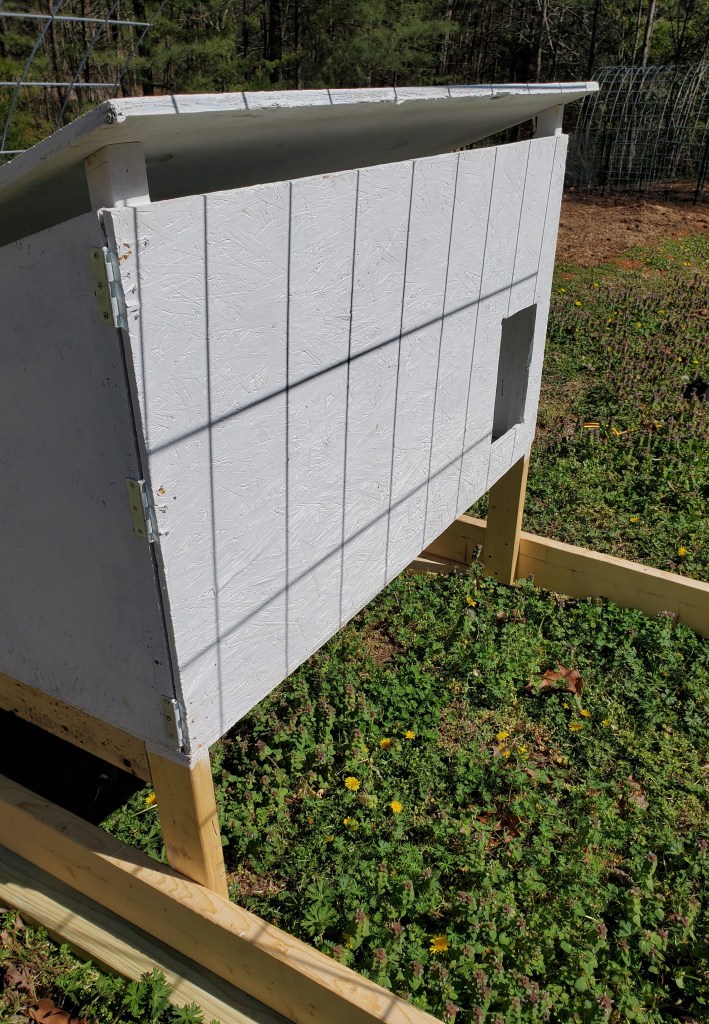
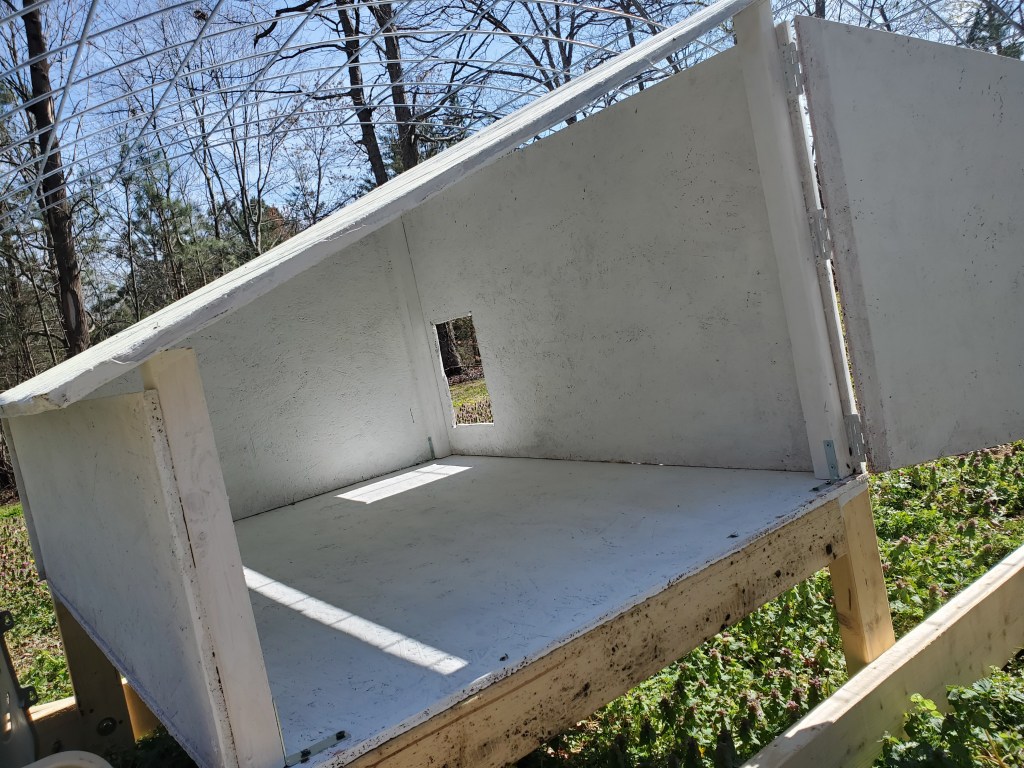
The coop has built in ventilation at the roof. That gap all around between the sides and the roof will be covered with hardware cloth to keep predators out and let air in. The entry for the chickens has been cut. One side opens so we can access inside to clean the coop and get to the chickens as needed.
Next up: wheels!
SO MUCH FOR RETIREMENT
I admit – it’s my fault the cold weather came back to North Carolina.
I had the audacity to retire the antifreeze in the chicken waterer.
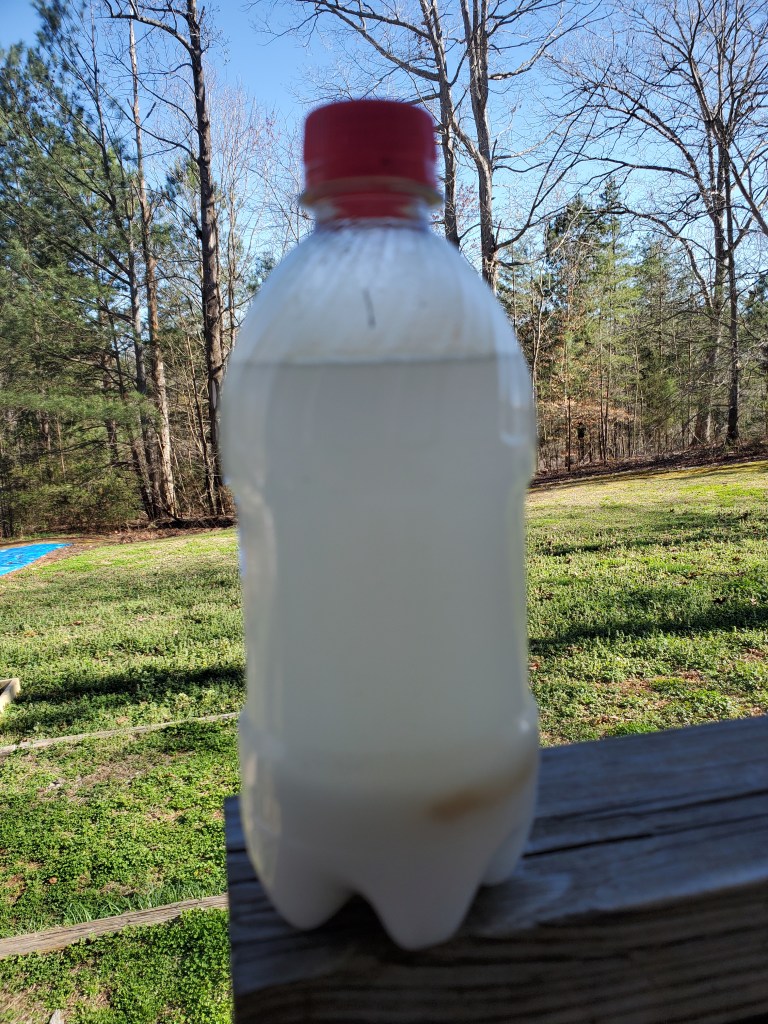
Several weeks after the 9 degree weather we “enjoyed” at Christmas, I saw a video showing that if you put 2 cups of salt in a 2-liter bottle of water and put the bottle in the chicken waterer, it will keep it from freezing. Seemed worth a try.
Since I only have a 2 gallon water container for the chickens, I put 1 cup of salt in an empty soda bottle, filled it with water and sealed it I put the bottle in the chicken waterer and, you know what? It worked!
We didn’t have the blistering temps of December after I implemented it but it did get into the 20’s several times and every morning the chicken water was not frozen.
It had been awhile since it got even close to freezing so I removed the anti-freeze bottle a couple of weeks ago.
Sure didn’t sneak that one by Mother Nature. This week she’s been letting us know she determines when winter is over.
Drat. I want to plant my peas!
TAKE STOCK – WEEK 11
This week it’s time to Take Stock of the Convenience Foods in our pantries.
Convenience foods are prevalent in the modern family’s kitchen. As handy as they are to speed meal preparation, however, becoming reliant on them could be problematic.
There are several reasons being dependent on convenience foods can cause problems: 1) convenience foods come from the grocery store and, as we have learned over the past few years, the supply chain is not always reliable, 2) convenience foods generally have a limited storage life, 3) we lose (or never learn) the skills needed to cook from scratch, 4) these pre-packaged foods often have an overabundance of salt, sugar, and other undesirable additives.
The good news is many convenience foods can be “manufactured” in your own kitchen and with healthier ingredients. Making them yourself will cost less, too.
Review your pantry. What convenience foods do you find? You can make many of those yourself!
Are you ready to stop buying boxed cake mix, pancake/waffle mix, little boxes of stuffing mix, gravy mix, seasoning mixes, cream of soup, cookie mixes? There are websites and books that can help us learn how to make them yourself. A nice place to start is with the book Make-A-Mix (Eliason, Harward, Westover).
As an example, instead of buying something like this:

Make your own supply of pancake mix:
BUTTERMILK PANCAKE & WAFFLE MIX (from Make-A-Mix)
- 2 cups dry buttermilk powder
- 8 cups all-purpose flour
- 1/2 cup sugar
- 8 teaspoons baking powder
- 4 teaspoons baking soda
- 2 teaspoons salt
Combine all ingredients in a large bowl, stirring until evenly distributed. Pour into a 12-cup container with a tight-fitting lid. Seal container and label with date and contents. Store in a cool, dry place. Use within 6 months. This mix will make 7 batches of pancakes.
When you are ready for some pancakes, mix 1-1/2 cups of the mix, 1 egg, 2 tablespoons oil, 1 cup water together and cook as you usually do. Makes ten 4-inch pancakes.
CHICKEN TRACTOR – PART 2
It’s always a big step to move from researching and analyzing to DOING but the step must be made to actually accomplish a goal.
Our first DOING step of building the Chicken Tractor was to build the frame. But, as you may recall, I got stuck on how to do the wheels so needed to do more wheel-specific research.
Throughout the next week, I filtered through You Tube videos to find the ones to show Oscar so he could see what we need to do for the wheels and develop a list of supplies.
The next weekend we worked out the size of the interior coop and purchased the wood for it. We also purchased the wheels and the parts needed for the wheel assembly.
The weather of course was not cooperating by the time we returned from our supply run so we had to wait for the rain to stop.
When we could finally work, we got the basic box of the coop built!
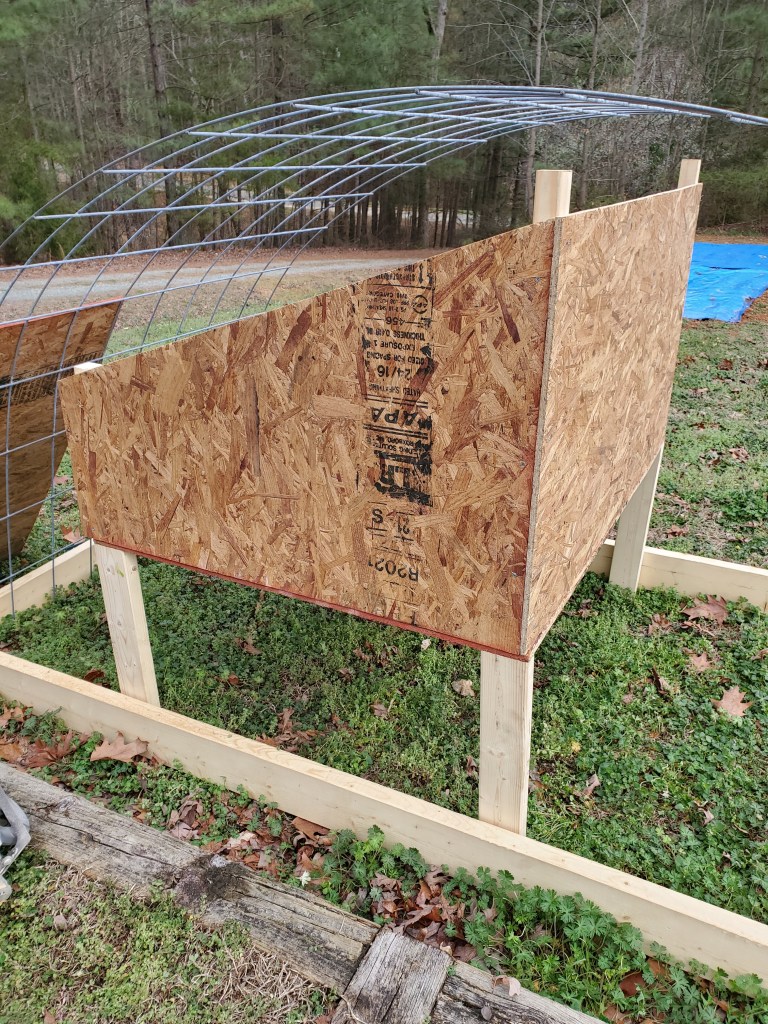

This project is taking longer than I want it to (I have a project for the chickens when I move them into the tractor), but we have managed steady progress.
TAKE STOCK – WEEK 10
This week let’s Take Stock of our Cleaning Supplies.
In the event of a natural or man-made disaster, many of these items will not be available. In the event of a personal financial shortfall, you won’t want to spend money on laundry detergent or toilet bowl cleaner with funds that should go to groceries or bills.
Every household has developed a list of cleaners they prefer. Some use name brand cleaners, some use eco-friendly cleaners, and some will even make their own.
Here’s a list of basic cleaning supplies from the internet. Use it to review what you have on hand. If you don’t use it, skip it. Determine how much of each you need to have available for six months or a year.
Basic Household Cleaning Supplies
Multi-purpose cleaner
Glass cleaner
Dishwashing liquid
Dishwasher detergent
Laundry detergent
Fabric softener sheets or liquid
Bathroom cleaner
Toilet cleaner
Floor cleaner
White vinegar
Furniture polish
Bleach
Ammonia
Disinfectant sprays or wipes
Watch for sales on the items that you need to stock up. On sale and sitting on your shelf is so much better than having to buy them at full price at financially inopportune times.
THE BALLOON PANIC
This afternoon was warm and lovely and perfect for a chicken walk-about.
They were ecstatic!
Shortly after I let them out of the run, they saw a hawk. Everyone ran to the woods and screamed. Fortunately, a crow chased the hawk away.
Did you know black or darker chickens are the safest from hawks? This is apparently because hawks can’t discern that they are chickens instead of crows. Adult crows are a hawk’s worst nightmare and hawks tend to avoid areas where there are crows. Because of this, I tend to listen for hawks and look for crows (which are easier to spot) before deciding to let the chickens out of their run.
With the hawk shooed away, things calmed down and the chickens got down to the business at hand — eating everything in sight.
A few hours later Oscar and I vaulted from our chairs due to the strident caterwauling from the chickens. When we got out there, the chickens were again in the woods and going absolutely bonkers.
What was causing distress this time?
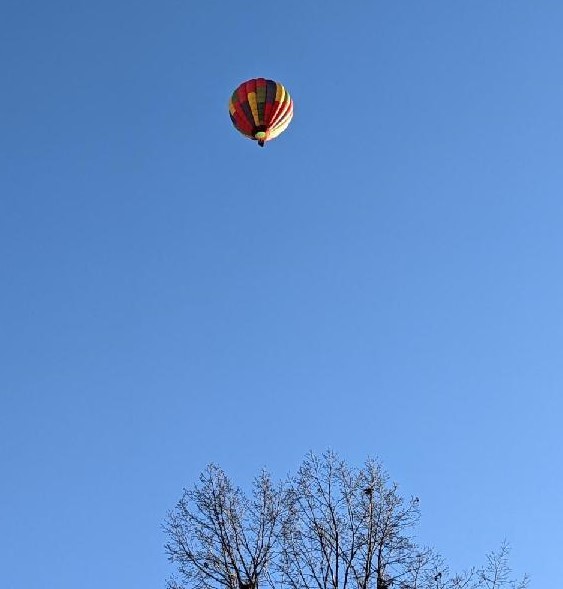
It was a couple of hot air balloons flying overhead that was causing the chicken angst. Not only was there a “predator” in the sky but every time one of the balloons engaged their burner, the sound would evoke even more vigorous shrieking from the flock.
Once that mystery was solved, I realized three of the chickens were missing! Olive, Marble, and Stormy were not in the woods with the others.
Soon though, we spotted them. They had apparently been so frightened that they ran through the woods, down into the ravine, and up the other side. Luckily, they were the three light-colored hens, or we wouldn’t have seen them.
Oscar had quite a time hiking over there and herding them back home.
I’ve had enough excitement for the day. I think I’m glad the sun is setting soon. The chickens will go to bed and peace will reign once more.
PROJECT BEGUN
We have been working on one of the umpteen jobs on this year’s Project List.
PROJECT: Build a Chicken Tractor
This winter my poor chickens have not been able to go on walk-about for a long time. With it getting dark so early, I am not able to let them out after getting home from work. On the weekends we either had cold or rain or some other reason they could not be let out of their run. Even though they have more than enough space in their coop and run, they did not have the enrichment of scratching, eating bugs, and the general pleasure chickens get from free-ranging. A chicken tractor would solve this problem.
A Chicken Tractor is a durable, light weight, movable chicken coop and run with an open floor. It can be moved around every couple of days, so the chickens always have fresh pasture to feed on. This lets chickens have access to grass and bugs while also being able to scratch and peck and deposit their manure to fertilize the ground. Chicken tractors allow chickens to live with the benefits of a free-range lifestyle without having to worry about predators or the manure build-up and other issues that a stationary coop and run can have.
Letting my chickens free-range and eat bugs and fresh greens, while still being protected from predators, will be so good for them but it’s beneficial to the homestead also. I will be able to control where they go and keep them out of the gardens (and the neighbor’s yard), they can help keep the rapidly growing grass in check without stripping an area bare (like they have done in the chicken run), lower feed costs, and several other perks.
The first step of this project took a couple of weeks – researching and deciding which of the dozens of versions of chicken tractor to use. There’s the Joel Salatin version, the Suscovich version, as well as A-frames, hoop houses, drag-along versions, wheeled-versions, the list goes on and on.
As it turns out, I used none of the ideas I found on-line. I am going with a modified hoop house (you know how much I like building with cattle panels!). So, as usual, we are figuring out this build as we go.
Figure-it-out-as-we-go tends to be fraught with difficulties. Oscar’s building skills have really come along over the past three years. My translation of what I see in my head into useful information remains a challenge. I can express the elements of what I want to do (put wheels on it, must be light enough for me to move but sturdy enough to keep the neighborhood dogs from tipping it over, has an easy to clean coop area, has nest boxes – even though my chickens have yet to lay in any of the nest boxes I’ve tried🙄, etc.) but I struggle to verbalize what I see in my mind, or important information like measurements, and I can only explain more specifics about the next part of a project once the previous step is complete. We’ve gotten through this before though so I’m confident we can do it again!
It’s always a big step to move from researching and analyzing to Doing but the step must be made to actually accomplish the goal. Until you DO it’s only a wish, not a goal.
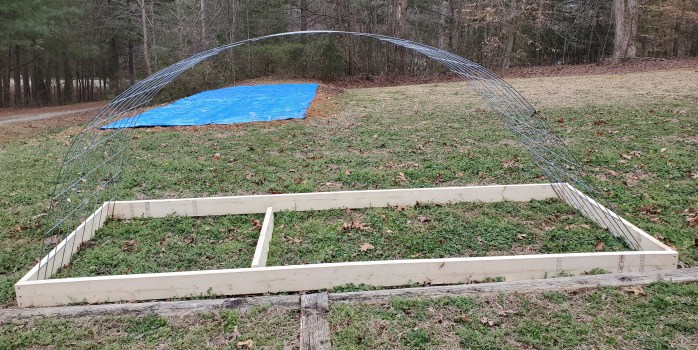
The day finally came for action so the first weekend’s activities included working out the shape and overall size of the chicken tractor and purchasing the boards for the frame. We also looked at wheels, but I didn’t know what size of wheels to get and couldn’t explain how the wheel assembly is supposed to work (when they aren’t in use for rolling, they need to be retractable).
So, more research was needed. By the time we got home with our supplies, the weather had turned nasty. Determined to get more done than spend money for supplies, we built the frame and before calling it a day.

PROJECT BEGUN!
TAKE STOCK – WEEK 9
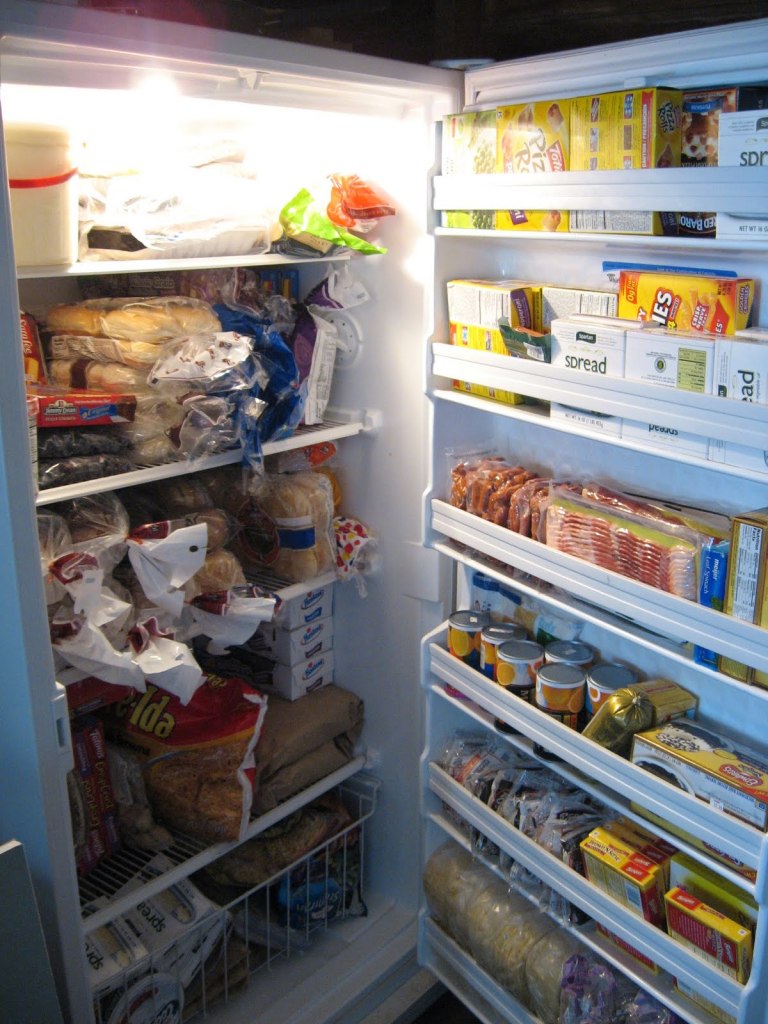
It’s time to Take Stock of what’s in your freezer and fridge.
These appliances are awesome tools that extend the useful life of food. However, they do not make things last forever!
Go through everything in your freezer and determine what to continue to keep and what needs to be used or discarded. Then repeat the process for your refrigerator.
While you are at it, clean the fridge and defrost the freezer.
This exercise will not only result in ensuring that the food you have in these appliances is safe to eat but will help you “discover” stuff you have forgotten you have, will show where you may have supply gaps, and will make room for the upcoming growing season.
Here is a link to a Cold Food Storage Chart to guide you in this assignment:
OSCAR’S NOT-SO-EXCELLENT ADVENTURE
Our weekday morning routine usually includes me preparing the chickens’ water and a “snack” of greens or fruit or occasionally 5-grain scratch which Oscar takes out to them. This morning I had put scrambled eggs and scratch ready to go on the counter.
I got 10 or 15 minutes down the road and got a text from Oscar with a picture of the snack that said, “All of these bugs came out of the corn.”

Yep, the scratch had become infested with weevils!
He dispatched these quickly (and hopefully efficiently) and took the bin outside.
What a way to start the day. For him. I was glad it wasn’t me dealing with all those creepy crawlies. Even from 10 miles away that picture gave me the heebie-jeebies.

TAKE STOCK – WEEK 8
The daffodils are up, the forsythia are in bloom, Spring will cascade upon us quickly. It is time to start thinking about gardening. I know some are still under snow but really: it’s time to start making plans and gathering supplies.
This week, let’s Take Stock of how well we are able to produce at least some of our own food.
“There are some who feel that they are secure as long as they have funds to purchase food. Money is not food. If there is no food in the stores or in the warehouses, you cannot sustain life with money. Both President Romney and President Clark have warned us that we will yet live on what we produce.” (J. Richard Clarke)
As we have become a more urbanized society, fewer people are growing a garden. There is no reason for this.
If you only have a small yard you can plant a garden. If you have a patio or balcony, you can plant a garden. If you have neither, there are ways to grow food indoors. It’s less important what the size of your garden is than that you do what you can within your circumstances.
If you have no space for an in-ground garden, or have limited mobility, you can grow in containers. The variety of containers available these days is stunning. They don’t have to be expensive either. I like my Greenstalk Vertical Planter but the price might hamper some. However, fabric pots are inexpensive and work really well. Goodness, even a cardboard box wrapped in a garbage bag works!
There is a learning curve to growing a garden that hinders many. However, there are so many resources available. Besides books you can find knowledgeable people at your local nursery (not the big box stores we tend to go to but the smaller, privately owned places in most every community). Poking around on You Tube will provide an answer to any question. There may even be classes to take or friends, family members, people at church from whom to seek help and / or information.
No matter how limited you feel your resources or knowledge are, if you have the desire, there is a way for you to grow food.
We’ve been counseled to grow a garden, produce our own food, and become as self-reliant as possible. Every step we take to follow the guidance we’ve been giving will bless us. Even baby steps.
What are you going to grow in your garden?
 Two Chickens Homestead
You must be logged in to post a comment.