WHAT DID WE LEARN? – EMERGENCY SCENARIO #3
What are some of the things you learned from participating in Emergency Scenario #3?
“IT’S TIME TO ROTATE YOUR 72-HOUR KIT FOOD & WATER – while this isn’t necessarily an emergency it’s something that needs to be done every year or so to ensure you are ready in the event of an emergency.”
This was an easier challenge than most but still essential for ensuring our families are prepared if we must evacuate our homes. There may also be times we have to “bug-in” (stay put) that would require us to utilize our 72-hour bags. Either way, we want them to be ready!
While a 72-hour kit (aka Bug Out Bag) includes much more than food and water, let’s just concentrate on this one thing for now.
Here are some of the comments from challenge participants at Food Storage Made Easy:
Liz shared, “All of our food in the kits is expired since we missed our last two rotations due to a house fire. Hubby just lost his job so replacement is going to be difficult, but I will work on it. We do have our regular food storage but it’s not for grab and go.”
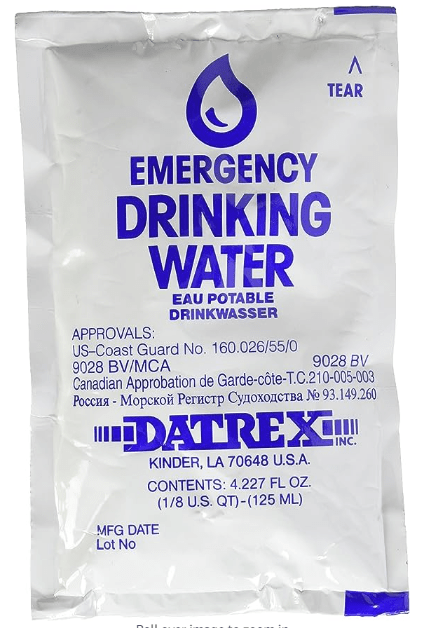
Sherrie admitted, “I completely failed this one. I didn’t have a single lick of food unless you count a few pieces of candy. Then I remembered we ate the food from a time before and I guess I forgot to restock the bag. I got the hubby’s 72-hour bag out and found it in the same shape as mine. Just a few pieces of candy. But he had a couple of drinking cups and 3 plastic knives & some packets of hot sauce and other types of similar condiments. We both had a handful of water pouches so not a complete loss there.”
Teri found a surprise, “It was perfect timing to go through my bag. The Nutella leaked a little and some of the oils got into my other stuff.”
Other comments involved the “barely palatable” taste of MRE’s with requests for suggestions of brands to buy that taste better than army rations.
Comment below: Were your experiences similar or did you learn something different about the food and water stores in your 72-hour kits? What foods do you have in your kit that have sufficient storability AND that your family likes? Do you have enough of both food and water for everyone in your household?
TAKE STOCK – EMERGENCY SCENARIO #3
IT’S TIME TO ROTATE YOUR 72-HOUR KIT FOOD & WATER
While this isn’t necessarily an emergency it’s something that needs to be done every year or so to ensure you are ready in the event of an emergency.
To LIVE this scenario for the next 24 hours means: you and your family will only eat and drink the items in your 72-hour kit AND will cook your meals using only the tools you have in your kits.
This is the opportunity to make sure you can live off the food and water kit in your 72-hour bag (aka Bug Out Bag), It may also be eye-opening to find out if your small (and big) picky eaters will actually Eat the foods you are storing.
After completing this task, sit down with your family to discuss what you learned and how to improve your 72-hour kit’s food and water.
We’ll circle back and review later this week!

A RIDDLE
What do you get when you combine a 4-foot length of 1-1/2″ PVC pipe, a coupler, a cap, and a can of tomato paste?

Wait of it …
TA – DA !

A Milky Spore applicator, of course!
And now you know. Lol.
THE PINK STUFF IS … MAGIC!
Back in May, I finally found a filtration system to remove the magnesium that was causing my water to be a disturbing orange-brown color. Not only was it undrinkable by County standards, but everything it touched also became the same nasty, orange-brown color – my dishes, my clothes, my shower enclosure, everything. There was no white to be found in my house.
In THIS post from June, I reported that I had been trying to scrub the nastiness off my dishwasher without success and might have to replace it. I mean, it kind of turned my stomach to look at it even though I knew it wasn’t dirty, just stained.
Today while heading to the register after purchasing the items for our next homestead project, I came upon a display of The Pink Stuff and felt compelled to try it. After all, what’s $6 spent as a last-ditch effort to not spend $600 on a new dishwasher?
I have experienced a Miracle!
Just look at the nastiness I started with:
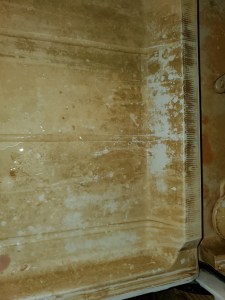
After just 10 minutes with The Pink Stuff and a Scrub Daddy, this is what I ended up with:

Can you believe it?!?!
After trying it on the door of the dishwasher, I discovered it’s not recommended for use on plastic since it’s abrasive but, really, I had nothing to lose and am glad I tried it. I will work on the rest of the dishwasher over the next few days.
This is not an advertisement. I am just so excited about this discovery I had to share!
WHAT DID WE LEARN? – EMERGENCY SCENARIO #2
What are some of the things you learned from participating in Emergency Scenario #2?
“You were involved in a car accident. You have some bumps and aches but were not seriously injured physically, however you have lost your memory.”
There are so many situations that can happen that put you out of commission for a short (maybe even a lengthy) time so this is definitely something we need to prepare for. While it may seem to be more efficient to keep everything “in your head,” that can become a disservice to your family.
Participant comments focused around the bill paying aspect this event would affect. Linda, commented: “This actually happened already. Not a car accident, but a really bad illness. What made the transfer of bill paying less difficult was a list of the bill, addresses, account numbers, due dates, and amounts in a binder. It was a lifesaver.” Gaby added “I did have a car wreck 17 years ago and was in the hospital for 3 including rehab learning how to walk again.” Her bill paying was already set up on auto-pay but this practice session reminded her that, since she is single, she needs to designate someone and explain what needs to be done in case she again becomes mentally/physically unable to do so. Biff indicated he is living this scenario now because of brain fog from Long Covid: “I managed to hold on to my job (sort of) but every so often I would come home and wonder why the lights wouldn’t turn on, or the phone didn’t work. After trashing my credit, I had the bright idea to automate every bill I could and it made all the difference. Now I’m trying to think of other things to automate, like meal prep and setting alarms for everything. Writing lists doesn’t really work for me any more, because that involves memory and concentration.”
However, there is more involved with this than just the financial aspect.
By participating in this exercise you should have come to realize that you and, as applicable, your partner, need to establish a plan in at least four areas:
Who will take over your family’s financial responsibilities?
If you haven’t assigned a trustworthy person who can undertake these functions and given them the tools to step in when necessary, now is the time to do so.
In my household, I keep a (somewhat) updated EFFAK (Emergency Financial First Aid Kit) in my Important Documents binder. This exercise reminded me it’s time to review and update my copy. The EFFAK includes checklists of important documents and forms to capture information such as: Household Identification, Financial and Legal Documentation, Medical Information, and Household Contacts. When the time comes, my designee has a list of the bills, when to pay them, and the account information to complete those transactions.
Who will make medical decisions for you?
Everyone over age 18 should have a Living Will / Health Care Power of Attorney / Advance Directive. If you do not need to handle these through an attorney, you and the other adults in your household can complete a FIVE WISHES document to provide for these requirements and also let your family know your wishes for end-of-life care.
Who knows where to find your personal and family calendars and the necessary contacts for family activities?
Do you keep family and personal appointments and contact information in your phone? If so, someone needs to know how to access that information. Do you have the names, addresses, and contact information for your children’s schools and daycare? Actually, this information is needed for every work / school / extra-curricular activity your family members are involved in. In addition to the EFFAK, your FAMILY EMERGENCY PLAN should be completed and made accessible to your family members. Click the green link to access a version of this document.
Who knows how to take care of your home?
Every household is run differently but, at an age-appropriate level, everyone should know how to take part in the running of the home and have the tools and knowledge to meal plan, grocery shop, cook, clean, take the car in for service, change the furnace filter, mow the lawn, etc.
Where is important information kept?
Every household should have an IMPORTANT DOCUMENTS BINDER. Click the green link for a list of the things to include in your Important Documents Binder, including the EFFAK, FAMILY EMERGENCY PLAN, and FIVE WISHES.
LEAVE A COMMENT TO SHARE WHAT OTHER WAYS YOU THINK WE SHOULD PREPARE FOR A SIMILAR SCENARIO?
TAKE STOCK – EMERGENCY SCENARIO #2
“You were involved in a car accident. You have some bumps and aches but were not seriously injured physically, however you have lost your memory.”
While this is a terrible thing to think about, this and many other scenarios where you are out of commission CAN happen. Nevertheless, the bills still have to be paid, the household must continue to be managed, family members must make it to school, functions, and appointments.
The focus of this scenario is: will your family be able to function should something happen to you? Do they have access to the necessary information to pay the bills? Do they know where the important documents are located? Do they know what is on the calendar? Can they do the household chores?
If you are willing to live this scenario, for the next 24 hours DON’T DO ANYTHING for your household that you would normally do. If you are the one who plans and makes meals – don’t. Laundry – not on you. Cleaning – nope. (Did I just hear a cheer go up around the country?)
If “living it” is not the option you choose, as with last week’s scenario, gather the family to discuss it. Then determine what needs to be done to ensure that, should something happen to you, they would still be able to function.
We’ll follow up on Thursday.
CHICKEN TREATS
With fall, comes pumpkins. While I am not planning to process any pumpkin or pumpkin seeds for the humans in the household this year, I did still pick up one at the grocery store yesterday. It is a favorite chicken treat.

Not only do my chickens love pumpkin, but it is also good for them. Some of the health benefits are:
- Water content – pumpkin is around 90% water. This high level of moisture helps thin chickens’ crop contents. This will aid in digestion. The crop is the first part of the chicken digestive system and it’s important to keep it healthy.
- Vitamin A – pumpkin is one of the best sources of beta-carotene, a powerful antioxidant that converts into Vitamin A in the body. Vitamin A boosts the immune system and helps regenerate cells. A chicken’s diet is often lacking in Vitamin A. This deficiency can create a lack of mucous in the eyes and throat. This opens the way for infections and potential respiratory problems.
- Antioxidants – pumpkins contain some of the highest levels of disease-fighting antioxidants compared to other vegetables including Vitamin C (helps maintain proper egg laying and egg quality), Vitamin E (protects against diseases like coccidiosis, e. coli, and bronchitis), and zinc (helps with bone and feather development, wound healing, and immunity).
- Minerals – pumpkin provides a variety of minerals like potassium (enhances bone development and cell metabolism), phosphorus (for healthy bones), and magnesium (to aid in calcium and Vitamin D absorption).
- Fiber – the tough flesh and stringy fibers of pumpkins promote healthy digestion.
No, the chickens don’t understand all this. They just enjoy eating it.
FIRST DAY OF FALL
We started this fine Fall day by moving the chickens back into the coop. “Fine” is relative – it’s nice and cool but stormy.
They’ve had a grand adventure being in the tractor and did some good work on the yard. They got to scratch and eat bugs and greens and every morning there was a new batch waiting for them when the coop door opened.
You can see the past few areas they’ve worked on:

As the weather changes, they will be more comfortable in the coop. Now that we’ve had a couple months experience using it, there are some revisions I want to make to the tractor. First, of course, is to figure out how to make it moveable using only grandma-power. There are a few security issues to resolve, too.
Planning ahead (what a concept) we disconnected the automatic door last night so it wouldn’t open this morning. That way the chickens stayed in the coop so we could move it with the lawn mower.
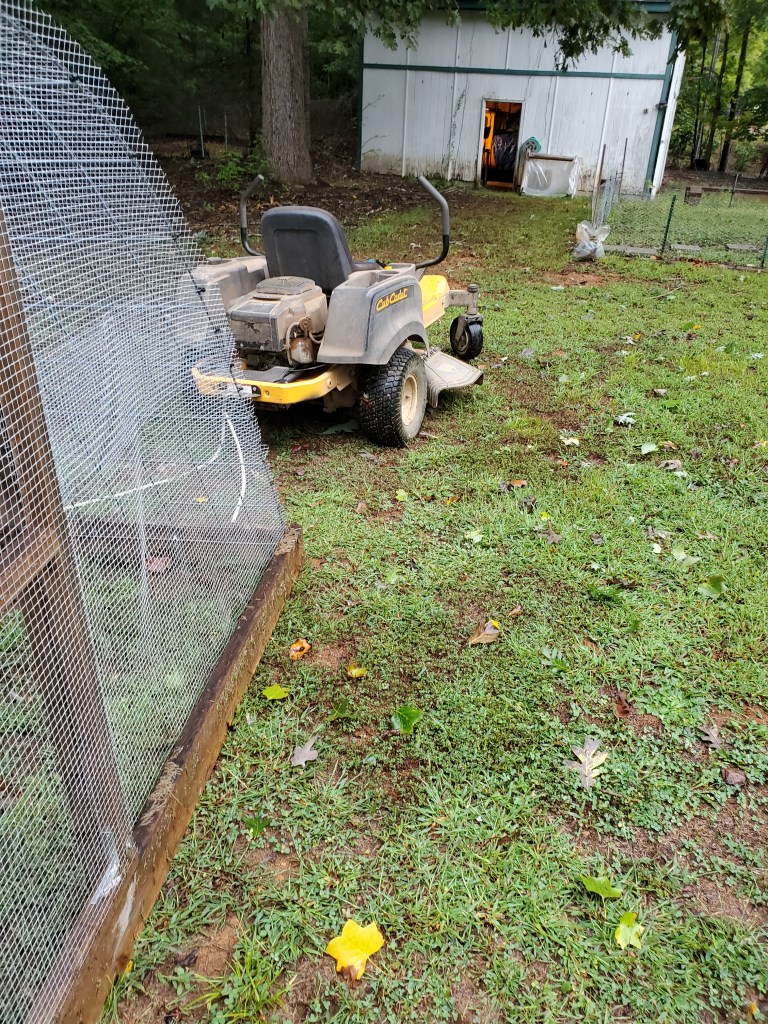
Yes, the mower can easily move the tractor but it’s difficult to get out of the garage (don’t ask why, you’ll just get a long rambling explanation) so it’s not an option for daily moves. Also, you can’t tell when you are running over the chickens when you move it with the tractor. Trust me. The most efficient way to move it on a daily basis is by hand.
As we retrieved the chickens from the tractor coop, each one got a quick field check – eyes, feet, vent – before being transferred to the main coop.

I was happy to see Road Runner (the rooster) seems to have recovered from his “accident.” He has been hoarse this week, as evidenced by the pitiful sounding crows he is emitting. My first attempt to give him a dose of oregano oil ended up in his eye. Ow, ow, ow! That would have been painful and very irritating to the eyes. We rinsed his eye – which I’m sure he took as “stab me and then drown me” – but the next morning it appeared to be stuck closed. Today though it’s open and clear! Click HERE to see why I use oregano oil for chicken illnesses.
We did have one escapee:

It’s a chilly, overcast day so this will be the end of our outside projects for the day. Don’t worry, there’s plenty to keep busy with in the house!
WHAT DID WE LEARN? – EMERGENCY SCENARIO #1
What are some of the lessons you learned from participating in Emergency Scenario #1?
“A train derailment caused hazardous material to spill into your local water source and it is contaminated. You are unable to use the water from your faucet.”
When you practiced this, did you take the following into consideration?
- You would have had to shut off the main water line to your house so that the contaminated water doesn’t reach your pipes. Do you know how to do that?
- You can only drink your stored water today. Do you have alternate sources of hydration (juice, etc)?
- You must cook all of your meals using your stored water. How will you adapt your meal plan?
- You can use your toilets but since your water is shut off you must flush with stored water.
- You must take a shower or bath using stored water
- How will you do your laundry?
- How will you wash the dishes?
Here were some of the comments I encountered from other participants at Food Storage Made Easy:
Kathy said this no water situation happens frequently in her neighborhood. When the power goes out, there is no power for the pumps on the community wells, so she gets lots of practice with this type of event.
Several people felt this wasn’t a problem for them as they were on wells or springs. Don’t get caught up in the specifics of the scenario. Ground water / well water gets contaminated too. As new developments and businesses are built in rural areas the water source for your well can be effected – and not in a good way. Your well should be periodically tested by the county.
Several people said they would flunk this exercise. They had little or no water storage.
Several others felt they were well prepared as they kept more than the 3-gallons per person suggested for your 72-hour kit.
Carmel had 7 fifty-five gallon barrels and 10 one-gallon jugs for a household of three. One thing to remember if you use large barrels for water storage: you need a pump to get it back out.
Nancy noted that her WaterBob (a liner for the bathtub to use for water storage) was only good if you had notice of an impending challenge (like a hurricane). In this scenario, that would not be an option.
Teri noted that she keeps water in her RV parked on her property that will provide 150 gallons. What are some other out-of-the-box storage ideas you can think of?
Teri also has a wash tub system for handwashing clothes (very expensive from Lehman’s).
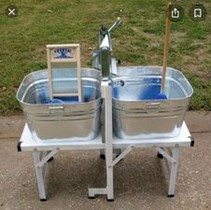
Less expensive laundry options are available on Amazon that might be better for a short-term water emergency situation.
Milenda said she found out she could still use her washer with the water intake turned off. She still had to pour water into the washer and run it through the wash and drain cycle, add more water for the rinse / drain / spin cycle. Is this feature available on your washer? Do you have sufficient water storage to do it?
Proper hygiene is a priority any time but it becomes a heightened matter when water is scarce.
Some people suggested using baby wipes or Wet Ones for hand washing. In an practice session a family friend did about ten years ago, they found that filling a spray bottle with water and small amount of soap allowed them to keep their and the children’s hands clean to ensure germ control without using large amounts of water as we do when the faucet is running.
Several people commented on the “refreshing” chill and how they had to adapt their bathing routine to use as little water as possible.
Many felt they had the drinking water covered but were lacking in the hygiene needs, especially for flushing the toilet. Do you even know how much water it takes to flush your toilet?
That’s enough from me. It’s your turn to chime in. What did you learn? Where are your weak points? What are you going to do to resolve them?
Everyone’s situation is different and how the problem is addressed may not look the same from one household to another. The important thing is that we take the counsel to STORE WATER seriously.
Leave a comment and help us all learn from your experience with this water challenge.
TAKE STOCK – EMERGENCY SCENARIO #1
As promised a couple of weeks ago, here is our first emergency to practice is this:
“A train derailment caused hazardous material to spill into your local water source and it is contaminated. You are unable to use the water from your faucet.”
If you’re up to the spirit of the original challenge, take the opportunity to live this scenario over the next 24 hours.
If that seems too overwhelming, gather your family and thoroughly discuss the scenario and determine the best way to handle that kind of event in your household. Even though you may not have gone through the motions, you will still have improved your family’s readiness through awareness and planning.
Consider what you would have to do to ensure you can continue to drink, cook, bathe, do laundry, water your lawn and garden, etc. Which activities would you have to make other arrangements for? What can you handle on your own?
Be sure to include your whole family in this activity and discussion.
At the end of the week, I’ll post some of the findings I’ve heard from other participants and you can share what your family learned from this exercise.
And, …. GO!
 Two Chickens Homestead
You must be logged in to post a comment.