PEPPERS GALORE
I picked my first batch of green peppers the other day. Look what I got off the 4 plants I have in the garden:

I only planted green peppers this year as I had so many dehydrated and frozen hot peppers from the past two years that my supply is more than sufficient until at least the next season.
What I don’t use fresh, I will slice/dice and either freeze or dehydrate.
UNINTENDED CONSEQUENCES
As the heat of summer has continued to plague us in North Carolina, the chickens are struggling.
Even though I provide them with shade, it only mitigates the issue in a limited manner. As we move the tractor from one spot to the next, the ground is left with piles of feathers they have shed in an effort to cool themselves. I feel sorry for them as I watch them panting in the heat and have continued to give them treats from the refrigerator and freezer to help them cool down.
Well, one of those treats has caused a rather funny side effect …
The other day I gave the chickens some frozen elderberries to enjoy. The next day I noticed Olive’s backside and thought, “How odd.”
Later both Oscar and I were working in the chicken run, and, noticing it again, I said to Oscar, “What’s do you think is wrong with Olive’s bum?” He reminded me about the elderberries.
“Ohhhhhh. Noooo.”
Hahahaha – the elderberries stained the chickens’ rumps as they pooped out the elderberries and now ….
My chickens have black butts!
We will have to wait until those feathers fall out before that little issue is resolved. In the meantime, I laugh every time I see them!

REBOOT, A BANANA PEEL, AND SQUASH
It was time for a fresh layer of bedding in the worm bin/tower. It’s a process because first I needed to rehydrate a couple bricks of coconut coir and some peat moss. That usually takes about a week to get the moisture level just right. Once that was done, it was time for the reboot.
After transferring the sticks of wood as well as a few wormy stragglers, I removed the older middle layer that the worms should have vacated when I add a fresh layer the last time. I dumped this layer into the pots holding the elderberry bushes and the fig tree. All those lovely worm castings will provide nutrients to those plants.
The top bin became the middle tier, and I dumped the bedding I had prepared into the new top level. I baited it with a cut up banana peel to lure the worms to the new level. The previous generations of worms loved banana peel so hopefully that is a species-wide favorite!

I’ll just continue feeding them for a few months until it’s time to repeat the process.
I had a nice surprise when I went out to water the garden yesterday: the squash seeds I planted only four days previously have begun to sprout!
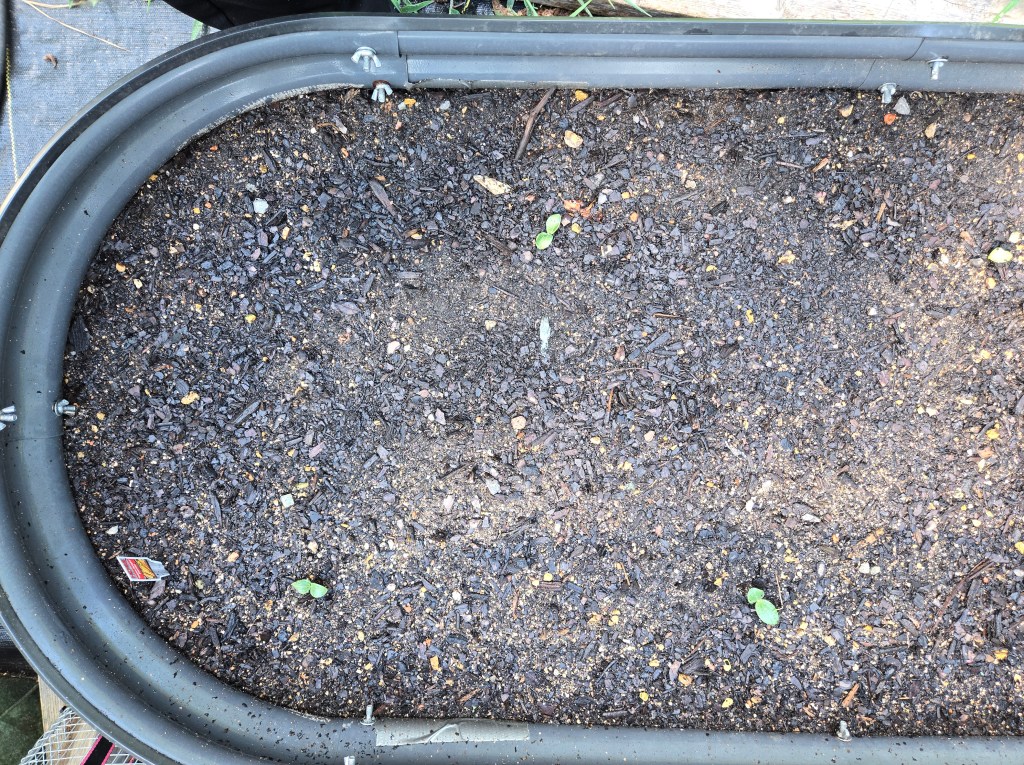
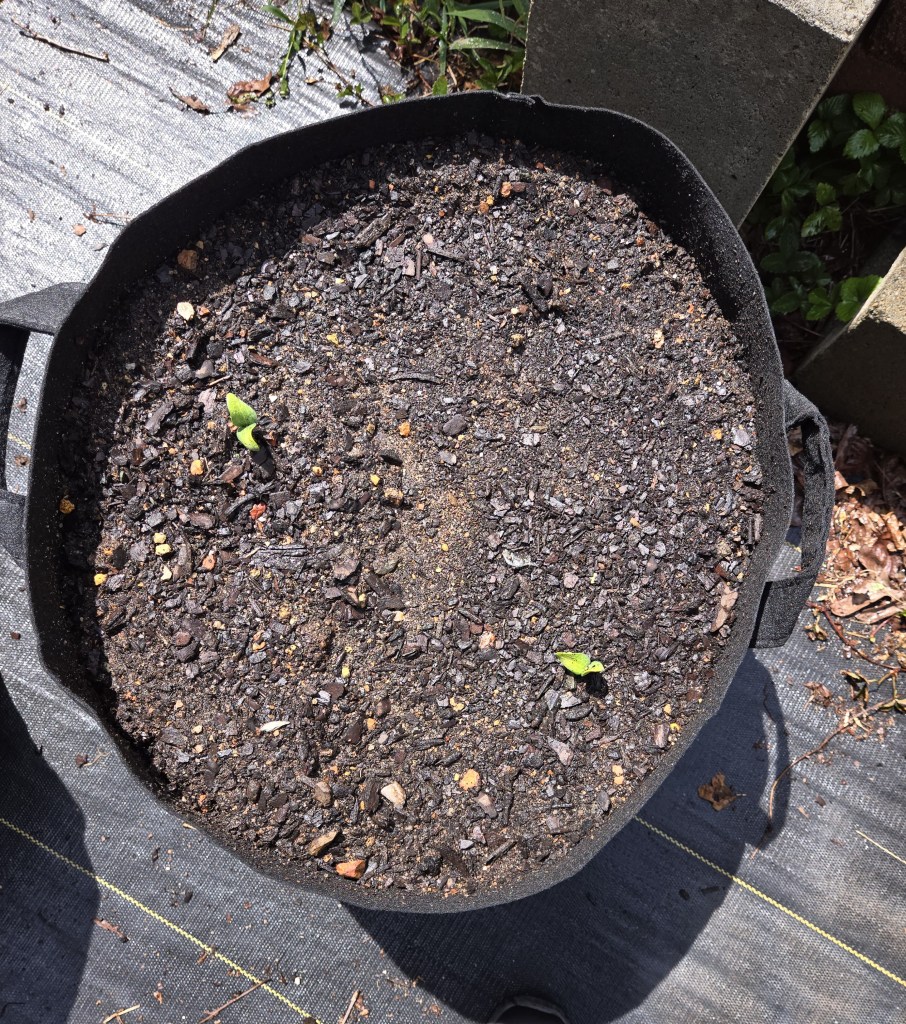
It looks like the old seeds aren’t having trouble germinating after all.
SQUASH IT
Since we have a long growing season in central North Carolina, we can actually get two crops of squash out of a season. Well, that is, except for the squash bugs. One of this year’s experiments involved waiting until the usual squash bug season was over before planting squash. I doubled down by not growing squash at all last year.
Today, I planted crook neck squash and yellow zucchini in the bed that previously held the peas and carrots. (BTW, I ended up with a total of 5.75 pounds of carrots!). I planted winter squash in the nasturtium bed (only 4 nasturtiums came up from last year’s re-seeding experiment so there was plenty of room). I filled three large fabric pots with spaghetti squash and, well, I can’t remember if it was yellow zucchini or more winter squash in two of them. Finally, I planted some kind of squash in the other planter intermingled with the lettuce and green peppers.
I used older seeds, so I doubt I have overplanted. If I’m wrong and everything comes up, guard your porch!
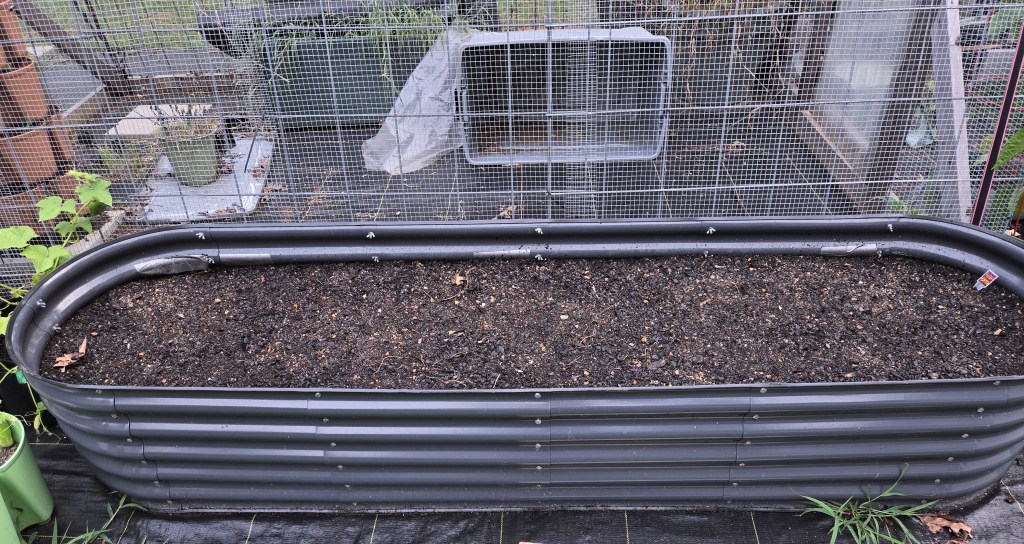
The reason I can’t remember what I put where is because, even though we waited until 6:00 in the evening after the yard is shady to go out, it is still so blazing hot outside that we were rushing to get everything done. The garden was watered, the planting was done, garden soil was transferred from the pile of garden soil to the three fabric pots, and dirty bedding in the tractor coop was scooped out. We worked as fast as we could. Nevertheless, we both were Dripping Wet with sweat by the time we got back in.
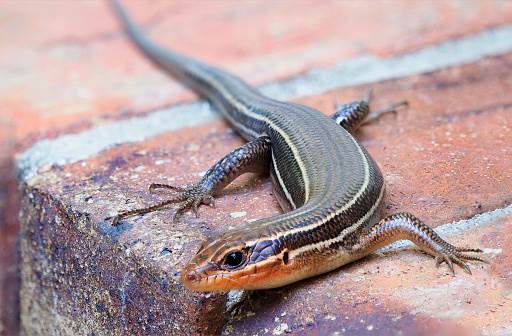
There was quite a bit of squealing going on throughout this process. One of the fabric pots apparently had a skink nest in it and every time I touched it another skink jumped out. One skink – one squeal. Next skink – another squeal. Don’t get me wrong, I like skinks. They eat bugs and you know how I feel about bugs, so you know that they are welcome. Oscar had the same issue when he uncovered the pile of soil in the driveway. Apparently, we had unintentionally created a couple of nice habitats on the property for them. I had noticed seeing more of them on the porch this year. Now I know why – the skink population is growing!
HOT CHICKS
We jumped immediately from the end of Spring to the middle of Summer, weather wise. This week the outside temperatures have been difficult to endure. The result is, I stay indoors and cross my fingers that the AC doesn’t drop dead and/or the electrical grid doesn’t get overloaded and leave us to swelter.
But what about the chickens? Even in the shade the chickens are panting and stressed in this hot weather. Providing plenty of water is critical but is not sufficient for their needs in these conditions. They need a means of cooling down.
Each day I have tried to provide them with some relief. Today their treat was this:

The Old Hens and the New Chicks each got a tray of ice and frozen vegetables to help them cool down. They really enjoyed walking in the cool water as the ice melted and the frozen vegetables helped cool them down from the inside.
This should help them make it through another hot day. Hopefully the temperatures will stop showing off and drop below 90 degrees (F) real soon.
A PECK, PECK HERE AND A PECK, PECK THERE
The “baby” chicks (now a little over 16 weeks old) have been in the big coop since the beginning of May, while the older hens have been in the chicken tractor. Now it’s time to start introducing the older hens back into the coop and run.
Mixing flocks can be tricky. There is a hierarchy in the flock and whenever you mess with it by adding newcomers, things can get very dramatic in the hen house! I’m expecting to be home all this week, so it’s a good time to start the process since I’ll be around to make sure things don’t get too hairy.
Sunday night, after everyone was asleep, we moved the first hen, Loki, from the chicken tractor to the coop. The theory that is espoused by chicken “experts” is that chickens are “unaware” in the dark and when the dawn comes, they will wake up and think that everything is normal, and those strange chickens were always around. Yeah, look at humans try to speak for chickens, smh.

Loki is on the lower end of the flock hierarchy among the big hens and is normally pretty chill, so she was the chosen one. Also, when Oscar went to collect a hen, she fell out of the chicken tractor coop. Clumsy sometimes moves you to the top of the list.
As expected, Loki has been doing a lot of pecking and chasing of the chicks. There’s lots of running around in the run and more than a few squawks throughout the day. It’s all part of the process though and, as long as there are no injuries, we will just let it play out. You would think the chicks would realize they outnumber her and could “take” her anytime, but no. Apparently, it’s all in how you present yourself – confident or scared – that wins out, even for chickens.
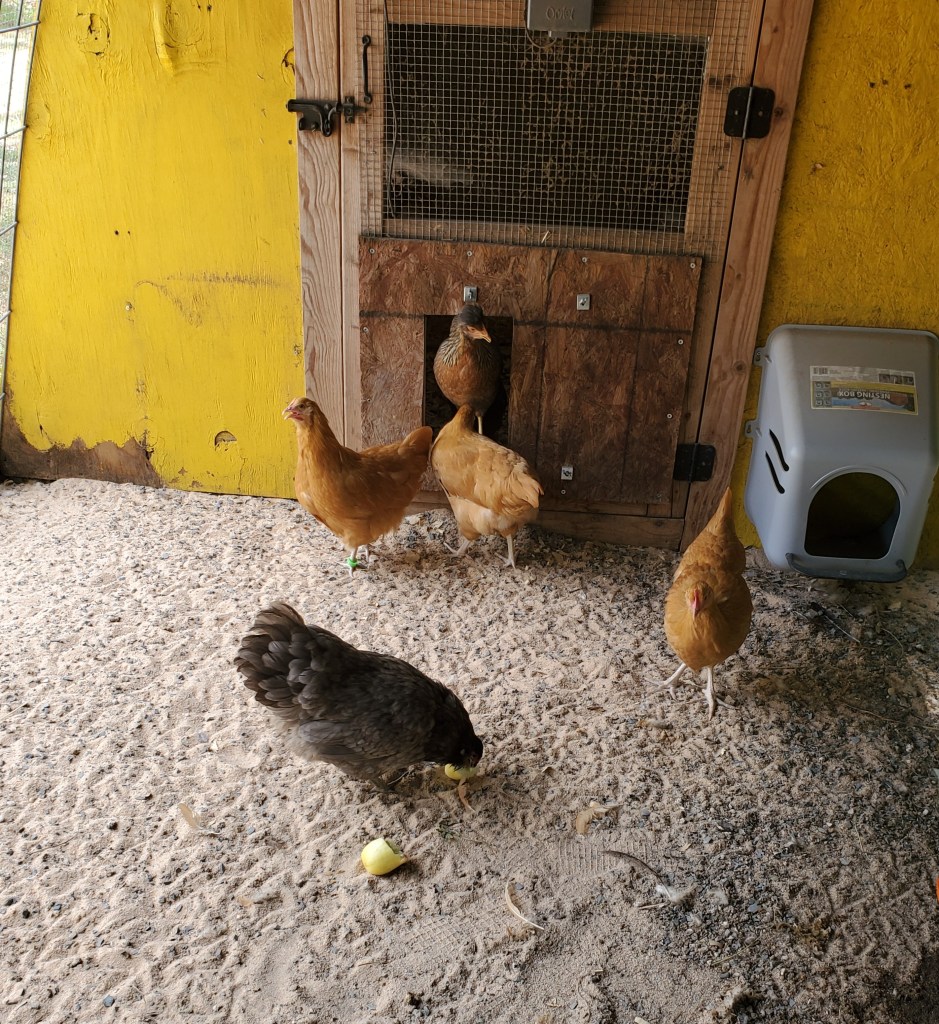
So, in the meantime, it’s “a peck-peck here, and a peck-peck there, here a peck, there a peck, everywhere a peck-peck.”

PSA AND A PAT ON THE BACK
Recently, I read an article that said you should change your washing machine hoses every 3 to 5 years. Hmm, I thought, it’s been 12 years – and trotted off to check mine.
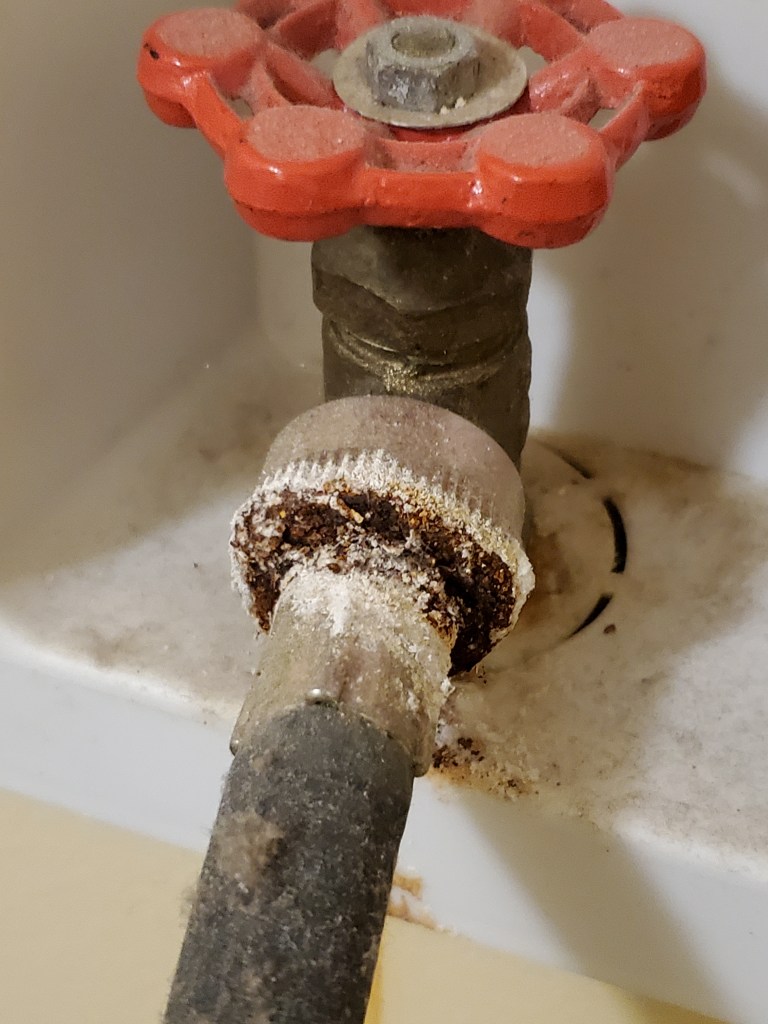
I ordered new hoses from Amazon and Oscar changed them out – after I cleaned out the nasty mess behind and under the washer (shudder).
Public Service Announcement: Go Check Your Washer Hoses!
This leads to the Pat on the Back …
Changing the hoses was easy peasy. Unfortunately, it was at that point, the cold-water faucet decided it had reached the end of its life and it sprung a leak.
Fortunately, the faucet didn’t leak when it was turned off and we had a couple of days before either of us needed to wash a load of laundry. Oscar checked out some videos on YouTube, determined the supplies he needed, purchased them from Home Depot, and replaced the faucets. This was something he had never done!
I was so proud of him!
FROM UNWELCOME TO WELCOME IN ONE GULP
As I was watering this morning, I found an unwelcome visitor:

The chickens were much more accommodating. It was gone in one gulp!
The rest of the garden had nothing but good news.
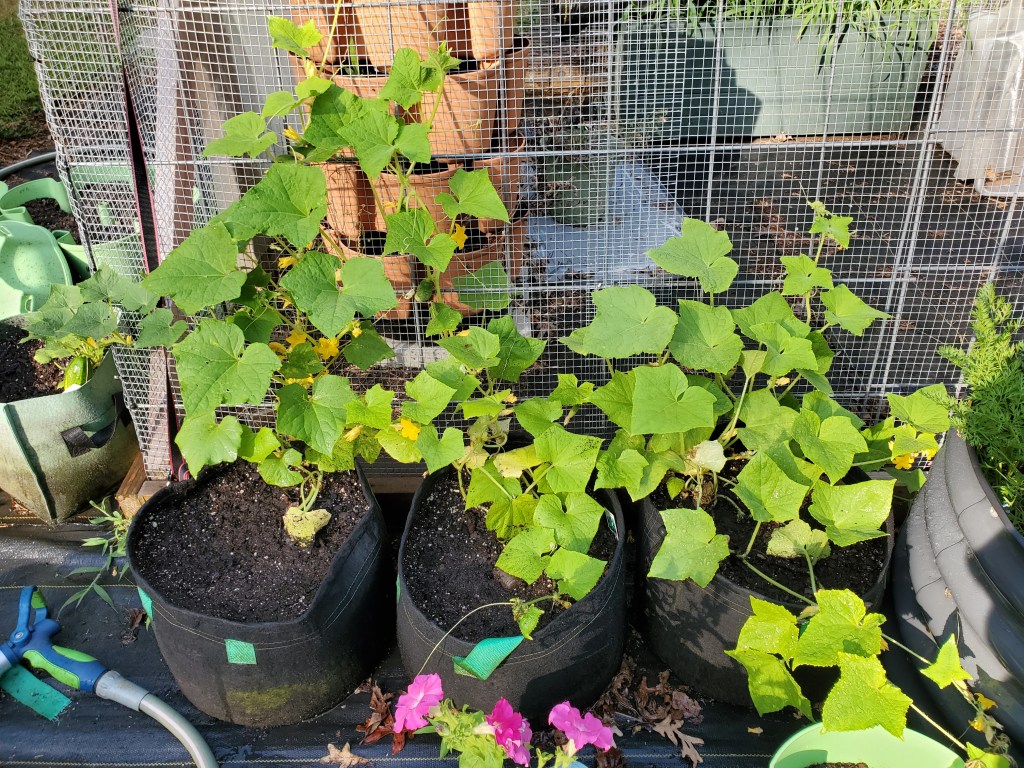
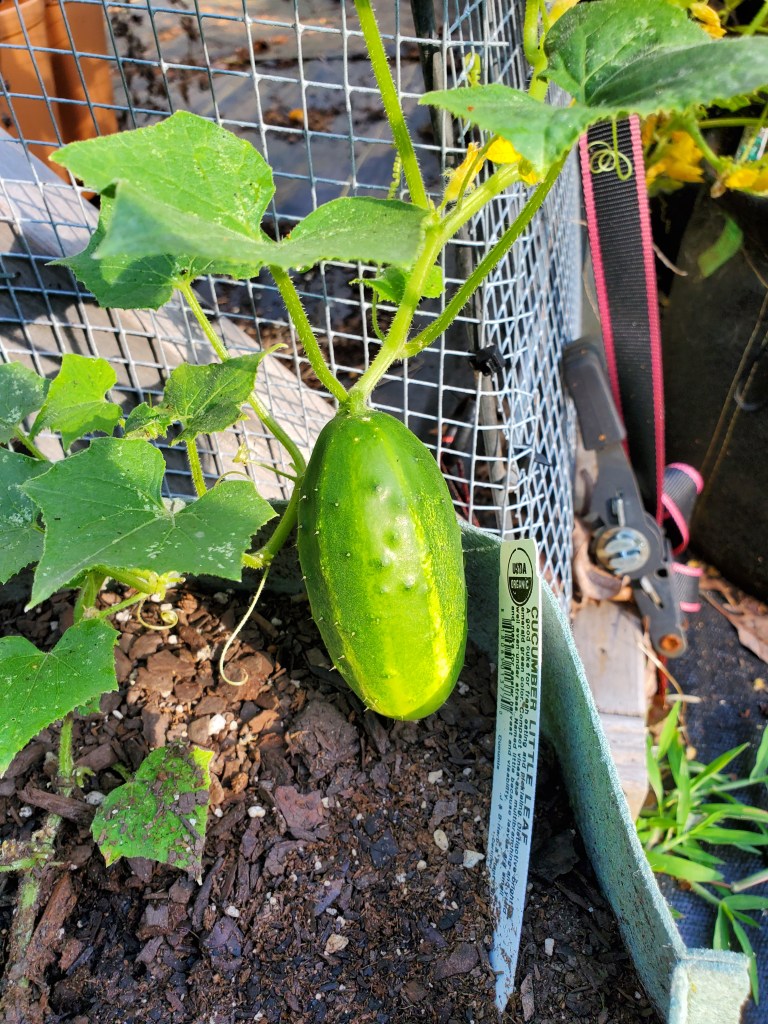
The cucumber plants are finally fully committed to climbing up the side of the greenhouse and have some lovely cucumbers growing on them:

The green peppers are getting bigger and there are several fruits on the plants:
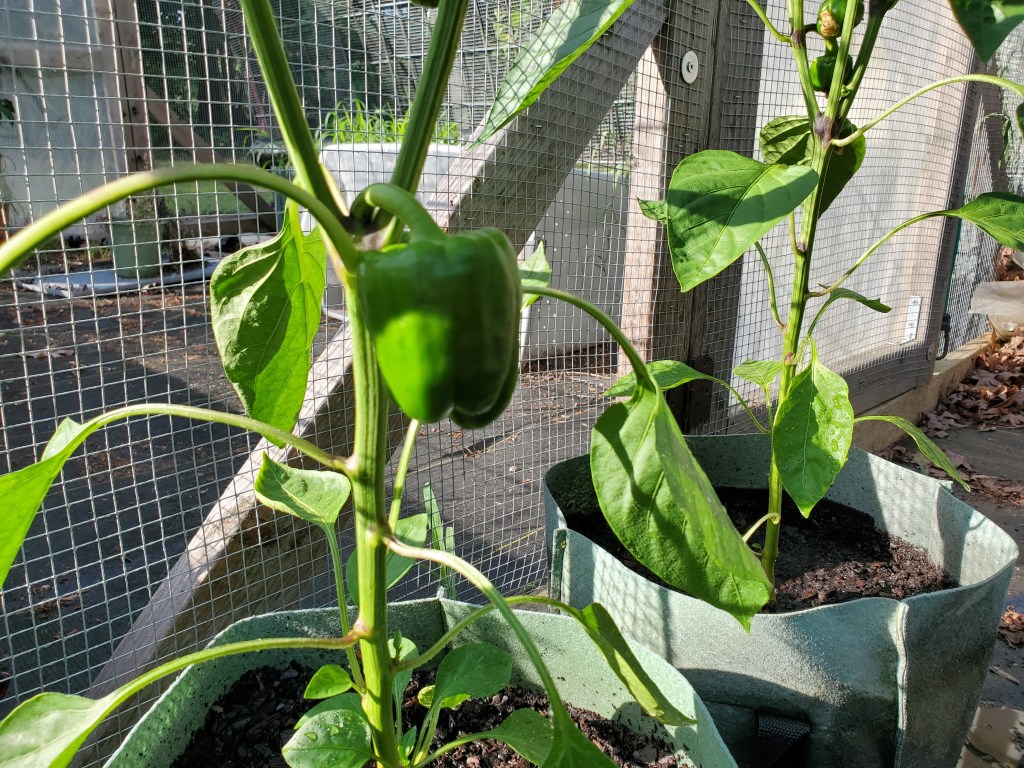
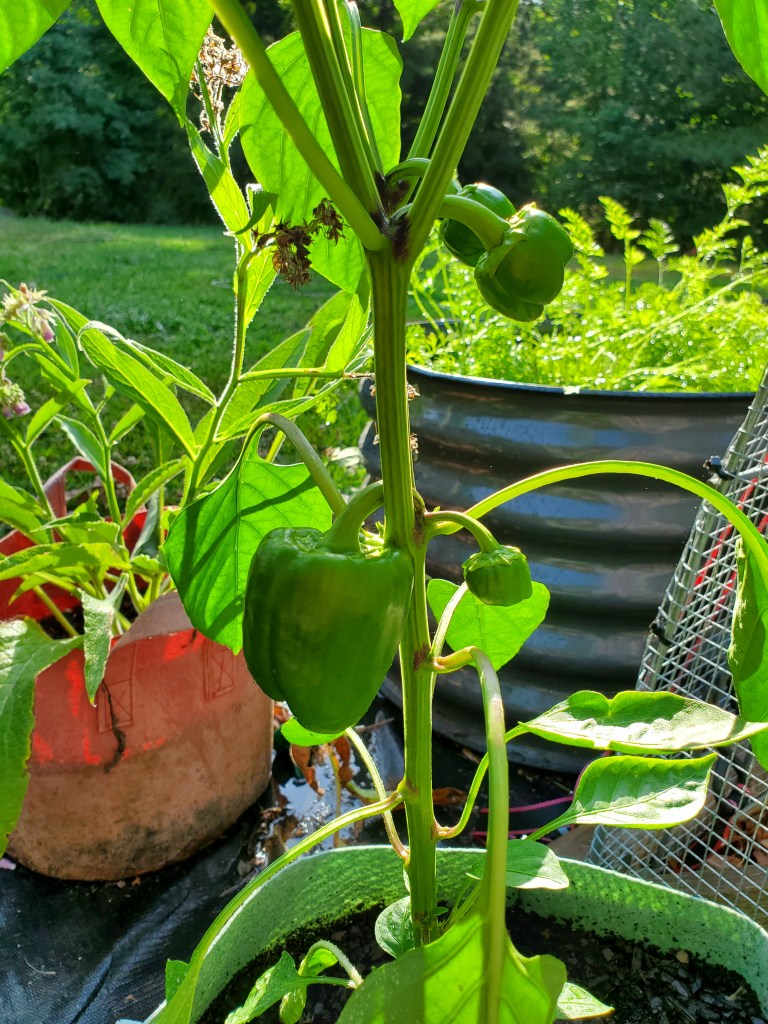
The heat and humidity are ramping up, but I am still cutting lettuce for the chickens. Lettuce doesn’t typically last much past early to mid-May, but I have found I can extend the harvest by cutting new growth every couple of days. The Young Chicks love when I show up with a basket full of greens to dump in the run.
I want to keep quiet (shh) about the apples. Shortly after I last reported how many baby apples were on the trees, the birds discovered them. It was very disheartening to see half eaten apples lying all over the ground. So, we’re not going to talk about the last three apples that I have been carefully, hopefully, watching.
BACK IN BERRIES
A couple of months ago, we ran out of blueberries. My supply was from our 2022 picking so we certainly did a good job of stretching them out. So, I was ecstatic when I heard from my friends at Wilding Acres Farms that their crop of blueberries was ripening and ready to pick.
Saturday, we went blueberry picking and came home with a nice first effort.
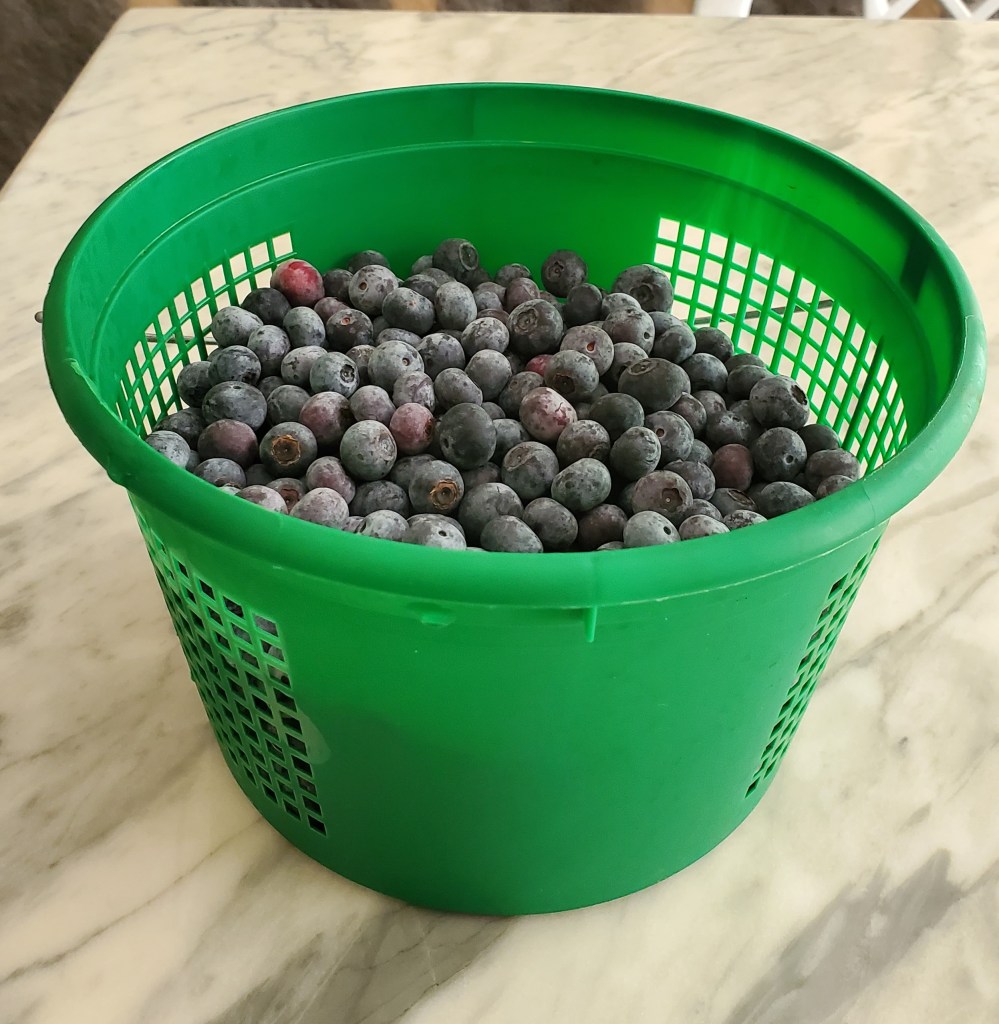
Blueberries are so easy to preserve. I just wash them, dry them, put them on my silicone trays, and pop them in the freezer for a couple of days. Then I will package them in 1-cup increments to pull out of the freezer and enjoy the berry-liciousness throughout the year.

From that 2/3 full bucket of blueberries, I got two trays in the freezer and made a double batch of blueberry muffins plus a mini loaf of bread.
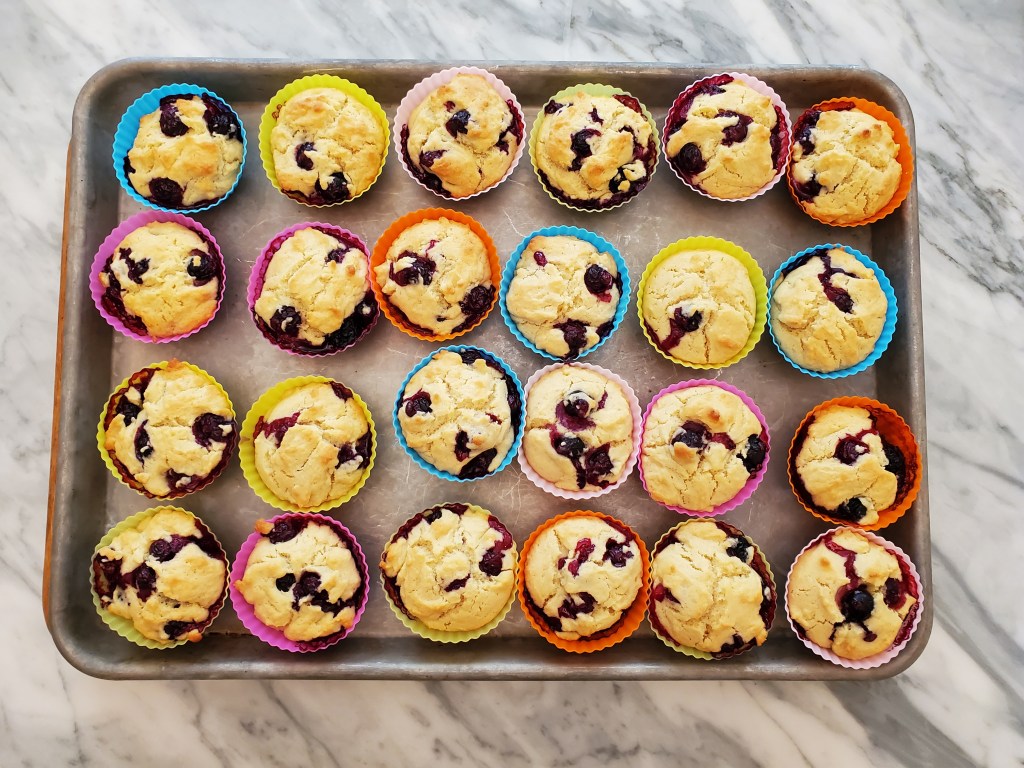
I look forward to going back for more in a couple of weeks!
BIGGEST HARVEST EVER
When I was growing up Alaska, my mom could not grow carrots. Not because the environment was inhospitable, not because of the permafrost (though that could cause short carrots), but because I would not stay out of the carrot patch. I thought there was nothing better than pulling young carrots and eating them while they were young, tender, and sweet. I don’t know if she ever did get a full-grown carrot back then.
I got yelled at a lot for that but just couldn’t resist.
When my daughters were young and all we had was a balcony, I still wanted them to experience a garden. We grew a small amount of peas and carrots in small planters on the balcony. It didn’t matter that the carrots wouldn’t get to full size in those planters since I always pulled them before they were full-grown, just like when I was a kid.
Growing carrots has been a bit of a struggle for me in North Carolina. First, because as a cool weather crop they need to be planted January through March and my internal planting calendar doesn’t kick in until May (Memorial Day weekend was planting time in every other place I’ve lived). Carrot seed germination rates has also been a struggle here. Though not a total failure, my carrot crops here have been disappointing.
This year I came across a couple of articles about how to improve germination of carrot seeds and tried a couple of different methods. One was to scatter seeds on a moist paper towel and keep it wet. When the seeds sprouted, plant them in the garden. The other was to simply soak them for a day or two before planting then cover them with a board when you first plant them in the garden (remove it when they sprout).
The paper towel method required consistently ensuring the paper towel remained wet for a couple of weeks. That kind of constant attention is a struggle for me. Then, when they were ready to plant, the sprouts were so tangled and ingrained in the paper towel that I could not remove individual sprouts to plant them with proper spacing. As it turned out, the best I could do was tear the paper towel in strips and try to spread the strips out. This meant that there were blobs of seedlings instead of nicely spaced ones.
Soaking the seeds suited me better since I only had to keep the seeds covered with water for a couple of days. That method had its problem though, too. As with the paper towel, I could not separate the seeds for planting at the recommended intervals as they clung together. So, again, I had blobs of seeds.
Because of this issue, I had to continually thin the plants to improve spacing. The chickens were happy with that but all I could think of was the missed opportunity of a getting a carrot!
Yesterday, I harvested about 2/3 of my carrot patch.
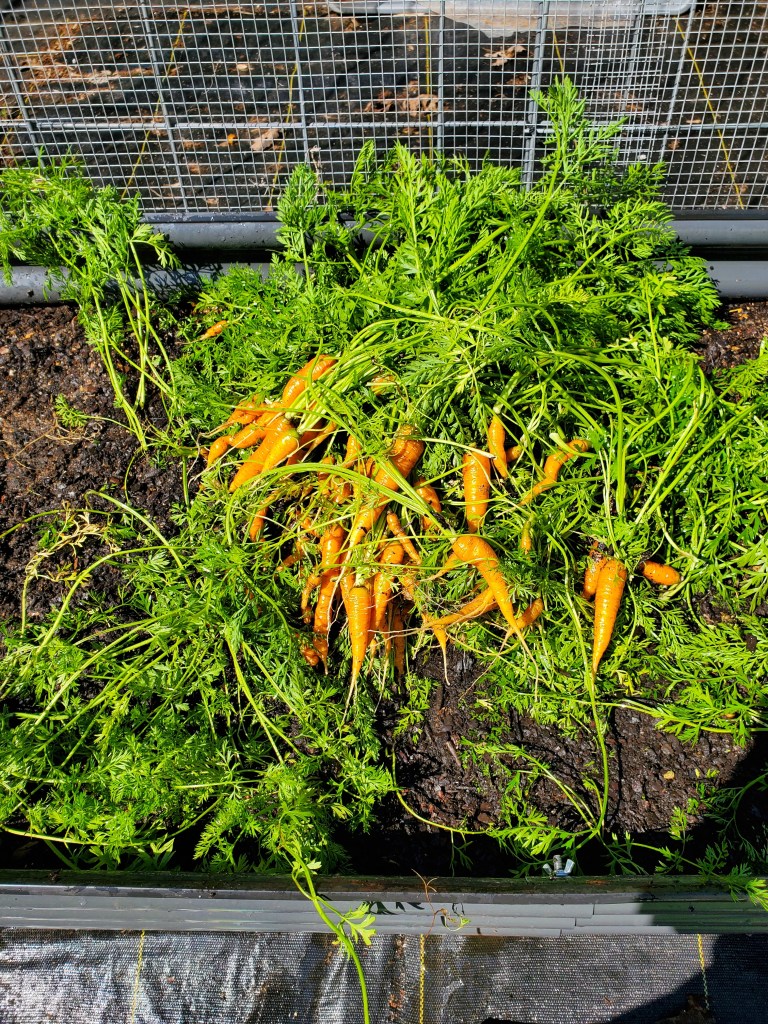
I pulled two and a half pounds of carrots – more than I’ve ever harvested from my garden before. I had planted Nantes and Little Finger (yes, that’s the size they are) seeds so I had a combination of large and small carrots. There were some that suffered from being too close together and got pulled up along with the ready-to-harvest plants while they were just getting started.
I will continue to use the soaking method in future plantings but need to find a way to space them better. That’s a problem for another day.
I cleaned them up (the chickens enjoyed the greens), cut them in bite-sized pieces, partially cooked them, packaged them in 1/2 cup increments, and put them in the freezer. I now have ready-to-use carrots for in soups, casseroles, etc.

I’ll harvest the rest of the carrots in a couple of weeks.
 Two Chickens Homestead
You must be logged in to post a comment.