MILKY SPORE
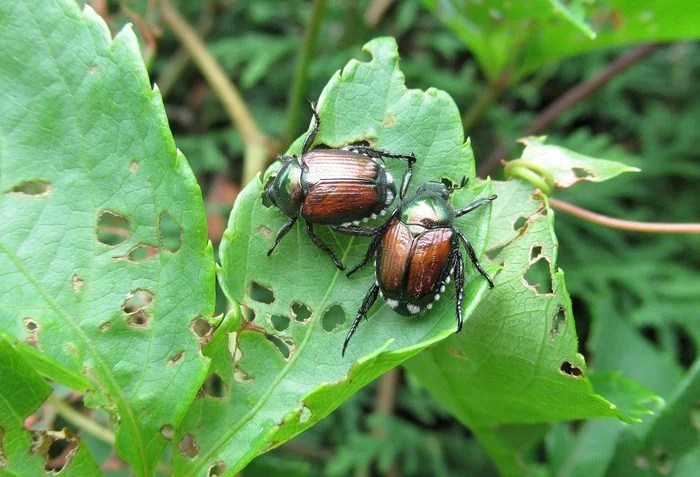
As you may recall, the focus of much of my planting this year was with pest deterrence in mind. My efforts were very successful, and I was pleased with the results – – except with Japanese Beetles.
I planted white geranium between my two apple trees. White geranium was specifically listed as a deterrent for Japanese Beetles. My apple trees have been heavily damaged by these nasty pests every single year.
This supposed deterrent was a complete failure. The trees were, again, absolutely covered with Japanese Beetles!
Completely frustrated I turned again to Google, looking for another solution. That’s when I discovered Milky Spore.
Milky spore is a naturally occurring, soil-dwelling bacterium that infects and kills the grubs of Japanese beetles. When the grubs eat the spores, they get a fatal disease called milky spore disease. It does take two years to fully disrupt the life cycle of the Japanese Beetle with this treatment. On the plus side, it is not toxic to people, pets, or other insects.
Last weekend we made a Milky Spore applicator. We started with some PVC pipe, coupler and cap. The mystery item was a can of tomato paste. Well, for the curious, here’s what we did with that:

We removed the lid of the can of tomato paste (the paste went into the freezer for later use), drilled holes in it, and it fit perfectly in the coupler, resting on the lip and secured when the pipe was inserted.
The instructions were to fill the pipe with Milky Spore, cap the top end, and tamp the pipe about every four feet across the lawn and garden. This would deposit a teaspoon of Milky Spore at each tamp spot.
Unfortunately, this applicator is meant to be used for Milky Spore powder. When I went out to apply it today, I discovered I had purchased Milky Spore granules and they were too big to come through the holes, even when we made them larger. When using granules, the instructions are to use a lawn spreader. Luckily, I have one!
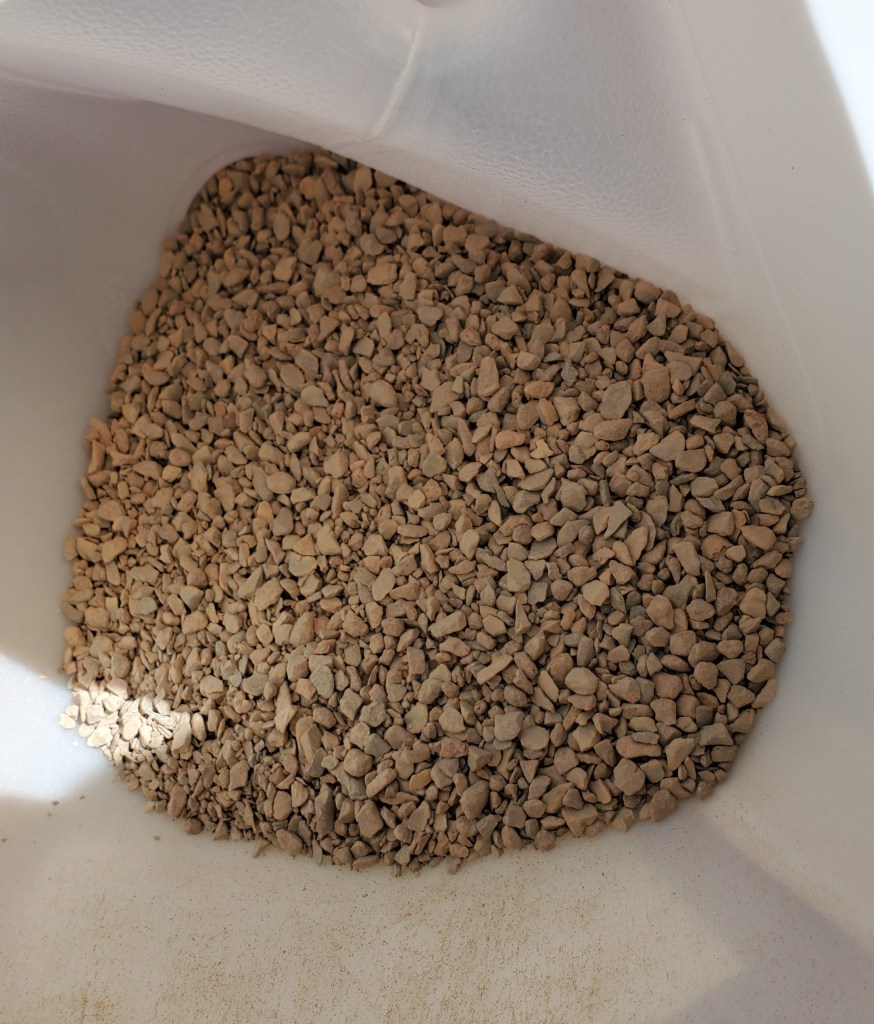
So, the first application is done. The next application is due in the Spring. Then again next Fall and the Spring after that.
I sure hope it works! It is so disheartening to see your apple saplings covered with dozens of Japanese Beetles. Ugh!
 Two Chickens Homestead
You must be logged in to post a comment.